


 8 months ago
87
8 months ago
87
ADVERTISE HERE

AirBorneo is an important move to keep Sarawak connected and ensure flights continue where they are needed most.

AS festive seasons approach, a familiar frustration resurfaces across Malaysia. Airfare rises sharply, emotions flare, and public anger is quickly directed at airlines and governments alike. From Hari Raya and Chinese New Year to Gawai and Kaamatan, Malaysians simply want to return home without feeling financially punished for fulfilling family obligations.
For East Malaysians, the issue is more fundamental. Air travel is not discretionary; it is dictated by geography. There is no road or rail alternative across the South China Sea. Flying is the only bridge home.
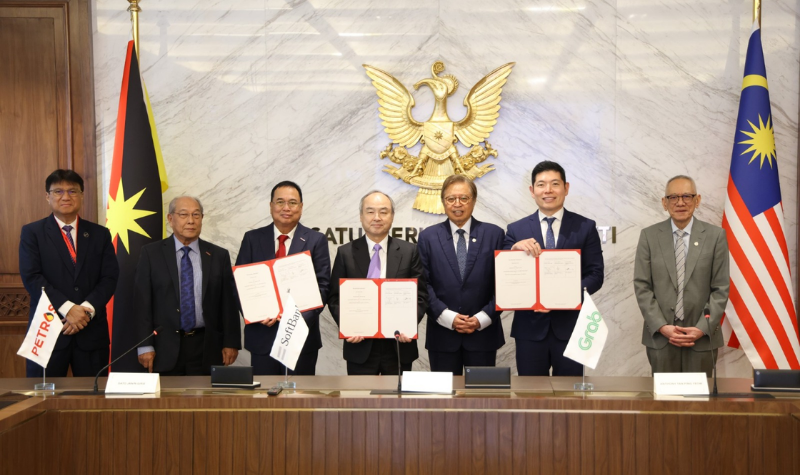
Against this backdrop, Sarawak’s move to establish its own airline was met with understandable optimism. As of January 1, 2026, the Sarawak government, through AirBorneo Holdings Sdn Bhd, officially took over MASwings to form AirBorneo, a wholly state-owned airline headquartered in Kuching. The takeover followed a Share Purchase Agreement signed on February 12, 2025 with Malaysia Aviation Group, transferring full legal and operational responsibility to Sarawak.
AirBorneo now operates the former MASwings network, focusing primarily on Rural Air Services (RAS) serving 24 destinations with a fleet of 14 aircraft, many of them small turboprops designed for short runways and low-density routes. During this transition phase, legacy MASwings branding and crew may still be visible, but operational control now rests firmly with the Sarawak government.
This context matters — because AirBorneo was never designed to be a festive-fare price warrior.
Aviation, as part of logistics, is an unforgiving discipline. Good intentions do not alter cost structures, and political ownership does not suspend economic laws. Cheap air travel is not created by branding, patriotism, or public ownership. It is created by scale.
Aviation is a high fixed-cost industry. Aircraft leases, fuel, maintenance, insurance, crew training, regulatory compliance, and airport charges exist whether planes fly full or half-empty. The only sustainable way to lower fares is to spread these fixed costs across a very large number of seats, routes, and flight cycles. This is why large network airlines can offer lower average fares over time. They benefit from volume, bargaining power, and dense route structures.
AirBorneo, by design, does not enjoy such scale. Its mandate prioritizes connectivity over commercial optimization. Rural Air Services involve smaller aircraft, lower frequencies, weather-dependent operations, and higher per-seat costs. Expecting AirBorneo to deliver ultra-low fares — especially during festive peaks when demand is compressed into a few narrow travel windows — misunderstands aviation economics. Logistically speaking, the numbers simply do not bend.
Another common misconception is that state ownership should automatically translate into cheaper tickets. While emotionally attractive, this belief does not withstand scrutiny. State ownership does not reduce fuel prices, lower leasing rates, or magically increase load factors. What it does is shift financial risk. If fares are kept artificially low, the losses do not disappear — they are absorbed by the state and ultimately borne by taxpayers. This is not cost reduction; it is cost displacement.
Subsidies are often presented as the quick fix for festive-season airfare spikes. Used selectively, they have a legitimate role. Targeted assistance for students, low-income families, medical travel, or essential journeys can be justified as social policy. But subsidies must remain policy instruments, not permanent pricing mechanisms. When fare suppression becomes open-ended, commercial discipline erodes, political pressure intensifies, and financial sustainability weakens. Aviation history is littered with airlines that collapsed under the weight of politically popular but economically unsound pricing.
It is therefore critical to be clear about AirBorneo’s strategic purpose. The airline exists to ensure regional access, continuity, and resilience, particularly to remote communities in Sarawak and parts of Sabah, that might otherwise be cut off. This supports social cohesion, tourism access, and local economic development. But connectivity comes at a cost. Smaller planes, thinner routes, and operational constraints mean higher unit costs. The trade-off is unavoidable.
Festive-season fare spikes are often framed as corporate greed or moral failure. They are largely the result of demand concentration. Millions of passengers want to travel within the same few days. Aircraft fleets cannot be expanded overnight to serve two weeks of peak demand. When demand overwhelms capacity, prices rise. This is not exploitation; it is basic logistics.
Looking at it this way, AirBorneo’s real value is not about forcing ticket prices down overnight. Its strength lies in having more planes, more routes, and more flight options. When there are more choices, passengers are less exposed to sudden price hikes, flight shortages, or being trapped by a single dominant airline. In logistics, having backups makes the whole system more stable. Over time, better availability helps keep prices reasonable — even if it doesn’t deliver dramatic festive-season discounts.
If Malaysia genuinely seeks more affordable air travel in the long run, the path forward lies in cooperation rather than illusion. Regional airlines worldwide survive through partnerships — code-sharing, joint maintenance, shared procurement, coordinated scheduling, and network integration. A small airline operating in isolation will always struggle to deliver cheap fares sustainably, regardless of intent or ownership.
The public conversation must therefore mature. Instead of demanding cheap tickets simply because an airline is “ours,” Malaysians should demand competence: safe and professional operations, reliable schedules during peak seasons, transparent pricing, honest communication, and a coherent national aviation strategy that genuinely integrates Peninsular Malaysia with Sabah and Sarawak.
Logistically speaking, there are only two real ways to reduce airfares. One is to achieve scale. The other is to subsidize losses. Everything else is political theatre.
AirBorneo is an important move to keep Sarawak connected and ensure flights continue where they are needed most. But it cannot — and should not — ignore how aviation really works. The real decision for Malaysia is not about choosing cheap tickets or expensive ones, but about choosing long-term, reliable connectivity over short-term popularity. In logistics, cutting corners always comes with a price.






 English (US) ·