
 1 month ago
26
1 month ago
26
ADVERTISE HERE

A billboard bearing the words ‘Thank You Malaysia’ in conjunction with the finale of Malaysia’s hosting of the F1 Grand Prix at the Sepang International Circuit, shown in this photo taken on Oct 1, 2017. — Bernama photo
FOR nearly two decades, Formula One (F1) symbolised Malaysia’s motorsport ambition, placing Sepang International Circuit (SIC) on the global calendar through a flagship event alongside MotoGP.
Today, industry players say the policy question facing Malaysia is no longer whether or not it can host major international races, but if its motorsport ecosystem is sufficiently structured, accessible and financially resilient to support any return to the top tier.
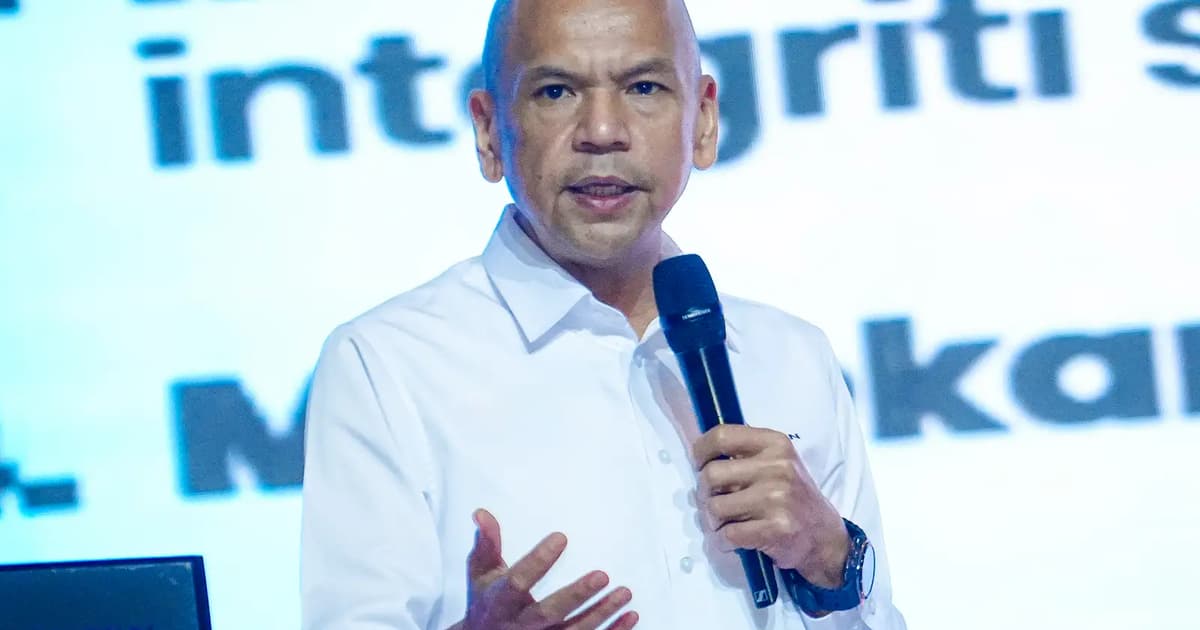
Tan Sri Mokhzani Mahathir, president of the Motorsports Association of Malaysia (MAM), said discussions around a potential return of F1 must be evaluated against cost, readiness and long-term ecosystem strength rather than nostalgia.
“When we first signed the contract, it was about US$12 million.
“Today, we are talking about more than US$50 million,” he said, adding that currency depreciation had further amplified hosting costs, with the ringgit now trading above RM3 to RM4 to the US dollar compared with around RM2.50 previously.
Mokhzani said F1 had evolved into a multi-day, experience-driven product, requiring host countries to invest heavily beyond the race itself.
“So, my question is, can we do that?
“If the answer is we are not sure, then maybe we don’t do that,” he said.

Tan Sri Mokhzani Mahathir — Bernama photo
Blueprint as policy anchor
Former SIC chief executive officer Datuk Razlan Razali, who is MAM treasurer, said MAM was in the process of finalising a national motorsport blueprint, expected to be completed by the second quarter of 2026.
He said the blueprint was intended to provide policymakers with a clearer, data-driven picture of Malaysia’s motorsport ecosystem, from grassroots participation through to higher levels of competition, including the size of the value chain, key gaps and structural constraints.
Mokhzani said the blueprint would map pathways across both two-wheel and four-wheel motorsport and clarify entry points for participants.
“Eventually, whether or not you are serious in investing time, energy and money into what you enjoy, where is the ladder?
“Where does it lead you?” he said.
According to Mokhzani, the objective is to ensure motorsport development over the next three to 10 years is coordinated, inclusive and grounded in safety, rather than driven by ad hoc decisions or headline events.
Last December, newly-appointed Youth and Sports Minister Dr Mohammed Taufiq Johari said the ministry was considering proposals to develop additional motorsport circuits across Malaysia to expand grassroots access and reduce reliance on a single main venue.
He said the proposals would be assessed on their merits to ensure any new facilities would be developed in a structured, sustainable and safety-focused manner, in line with longer-term ecosystem planning.
The move signalled a policy shift towards expanding physical access to motorsport infrastructure, although any decision would need to be sequenced alongside efforts to strengthen development pathways and institutional coordination.
Policy choices, not nostalgia
Former Formula One driver Alex Yoong said renewed global interest in F1 did not alter the structural realities facing Malaysia’s motorsport ecosystem.
“But without a strong base, bringing it back doesn’t fix the ecosystem,” he said.
Yoong said policy discussions must distinguish between prestige and participation, warning that high-profile events alone would not create sustainable teams, jobs or domestic value.
Professional drift driver Tengku Djan Ley Tengku Mahaleel said grassroots participation had expanded through accessible formats such as gymkhana and drifting, but participation alone could not guarantee progression.
“Motorsports is not your average sport.
“It requires a lot of funding to be able to move on,” he said, adding that the absence of clear entry points limited the development beyond the introductory level.
“There is no clear path for how you get into motorsports. It is always word of mouth,” he added.

Yoong says renewed global interest in F1 does not alter the structural realities facing Malaysia’s motorsport ecosystem, but without a strong base, bringing it back does not fix it. — Bernama photo
MotoGP, two-wheel advantage
Razlan said decisions on hosting major motorsport events must reflect what the country could realistically sustain over time.
He noted that when Malaysia first hosted F1 in 1999, the annual rights fee was about US$12 million before escalating significantly in later years, making long-term continuation increasingly difficult without commensurate commercial returns.
Prior to hosting F1, Malaysia had hosted the Malaysian Motorcycle Grand Prix (MotoGP) at the Batu Tiga Circuit (also known as the Shah Alam Circuit) in Selangor from 1991 to 1997, and at the Johor Circuit in 1998.
The event moved to SIC shortly after the circuit’s opening in March 1999.
Razlan said MotoGP’s cost structure had remained more aligned with Malaysia’s market realities and regional demand, particularly in Southeast Asia, where two-wheel mobility was deeply embedded in daily life.
He also noted the developments in neighbouring markets such as Thailand and Indonesia, where sustained government backing and strong two-wheel fan bases had reinforced MotoGP’s regional presence.
However, he cautioned that cost alignment and audience relevance were insufficient without policy stability and institutional commitment in Malaysia.
“It has to be a long-term commitment.
“You cannot reap something in the first three years,” Razlan said, stressing that ecosystem development would depend on continuity and sustained national backing.
He added that mega sporting events required consistency in direction, as vendors, teams and commercial partners needed certainty before making long-term investments.
Cost realities, sequencing
At the professional level, endurance racing team owner Douglas Khoo said the economics of international motorsport remained prohibitive regardless of prestige.
He said a GT race car could cost from 500,000 euros to more than a million euros, while an international endurance race could cost about 200,000 euros per round excluding the car, with tyres alone accounting for a significant part of the operating expenses.
Khoo said many costs, including logistics, accommodation and crew payments, remained largely fixed regardless of race duration, making endurance formats more cost-efficient in terms of track time relative to spending.
Industry players said these cost realities underscored the need for careful policy sequencing, where ecosystem depth, access and talent development were strengthened before committing to high-profile international returns.
As Malaysia reflected on its F1 chapter, stakeholders said the policy challenge was no longer about proving capability – SIC’s existence had already done that.
The harder question was whether future decisions would prioritise ecosystem structure over spectacle, pathways over prestige, and long-term participation over short-term attention.
In that context, the future of Malaysian motorsport might be shaped less by the return of a single chequered flag, than by how policy choices would align with investment, access and development over time. — Bernama




 English (US) ·