
 9 hours ago
9
9 hours ago
9
ADVERTISE HERE
KUALA LUMPUR: The dissolution of the Negeri Sembilan state legislative assembly on Friday (Jun 5) - which had been led by a chief minister from Prime Minister Anwar Ibrahim’s Parti Keadilan Rakyat (PKR) - is a “tit-for-tat” response to an earlier move by the Barisan Nasional (BN) coalition in Johor, say analysts.
They add that the snap polls in Negeri Sembilan would be used by Anwar and his Pakatan Harapan (PH) coalition as a bellwether to gauge voter sentiment and chart the coalition’s path forward.
Even so, observers say that PH’s move in Negeri Sembilan is a “calculated effort” to preempt any political momentum BN might gain in Johor’s state election, where the latter has signaled its intent to contest independently and is widely expected to secure a decisive victory.
Ahmad Fauzi Abdul Hamid, a political science professor at Universiti Sains Malaysia (USM) told CNA that the PH leadership and Anwar were largely caught off guard by BN’s manoeuvres in Johor.
"By acting now, the PH (leadership) is attempting to balance the political narrative and timing. After the developments in Johor, PH wants to demonstrate that it cannot be bullied by an opposing side that is ostensibly a coalition partner at the federal level,” he said.
PH and BN are partners in the unity government, but ties between the two coalitions have been strained recently when 14 United Malays National Organisation (UMNO) assemblypersons in Negeri Sembilan withdrew their support in April for Chief Minister Aminuddin Harun over his handling of a crisis involving the state’s monarchy.
UMNO is a key component party within the BN coalition.
Ahmad Fauzi noted that Negeri Sembilan is more reflective of the national political sentiment compared to Johor.
"This election acts as a warning to PH and Anwar Ibrahim, providing a glimpse of what to expect and proving that a test run is essential to gauge the current political landscape," he told CNA.
REACTIVE MOVE
Analysts said that PH’s decision to dissolve the Negeri Sembilan assembly more than two years before it was due was largely reactive to the political situation in Johor.
The next Negeri Sembilan state election was not initially due until November 2028 while Johor’s one was due only in June next year.
It is the prerogative of the state’s ruler or governor to dissolve the state assemblies on the advice of the chief minister, who is typically from the state’s ruling party or coalition. Johor Chief Minister Onn Hafiz Ghazi had announced the dissolution of the state assembly on Jun 1.
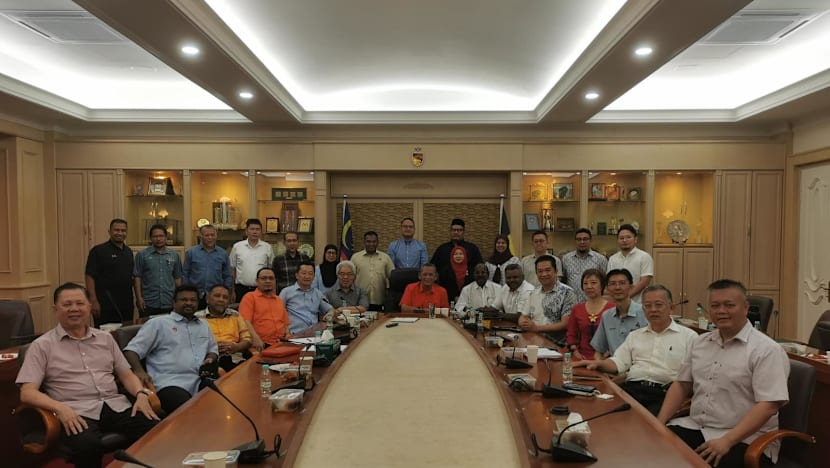 Pakatan Harapan (PH) leaders and PH Negeri Sembilan state assemblypersons at a meeting at the Negeri Sembilan Chief Minister's residence on Jun 2, 2026, believed to be discussing the state election. (Photo: Facebook/Cha Kee Chin)
Azmi Hassan, a fellow at the Nusantara Academy for Strategic Research, believed that PH made a “hasty” decision in calling for snap polls in Negeri Sembilan, to preempt any political momentum BN might gain from a positive showing in Johor.
“UMNO is a dominant force in Johor and can form the state government by themselves, but it isn’t the same in Negeri Sembilan,” he said.
There are 56 seats in the Johor state assembly. In the last state election in March 2022, BN won 40 seats, PH won 12 seats, Perikatan Nasional (PN) won three seats, while the Malaysian United Democratic Alliance won one seat.
Meanwhile at the August 2023 Negeri Sembilan state election, PH won 17 seats, BN won 14, and PN won five seats. At the time, PH and BN had an electoral pact to work together in the state polls.
Ahmad Fauzi echoed Azmi’s assessment, saying that PH has a stronger foothold in Negeri Sembilan than in Johor.
“PH, especially DAP, has a better standing in Negeri Sembilan especially in the urban areas, and they might feel that they have a chance to make it fair and square (against BN) but it is still very hard to predict the outcome,” he said, referring to the Democratic Action Party (DAP), a PH component party.
But Ahmad Fauzi said that PH’s move was a gamble that could backfire on them.
"It is a significant risk. If BN secures a majority and PH fails to reach a new agreement with them (post elections), they could be ousted from power in the state. Ultimately, it is a political gamble, and only the election results will reveal if it was worth the risk," he said.
After BN had announced that it would be going solo in Johor on May 16 ahead of the Jun 1 announcement, leaders from PH had reacted angrily during their convention in the state the next day.
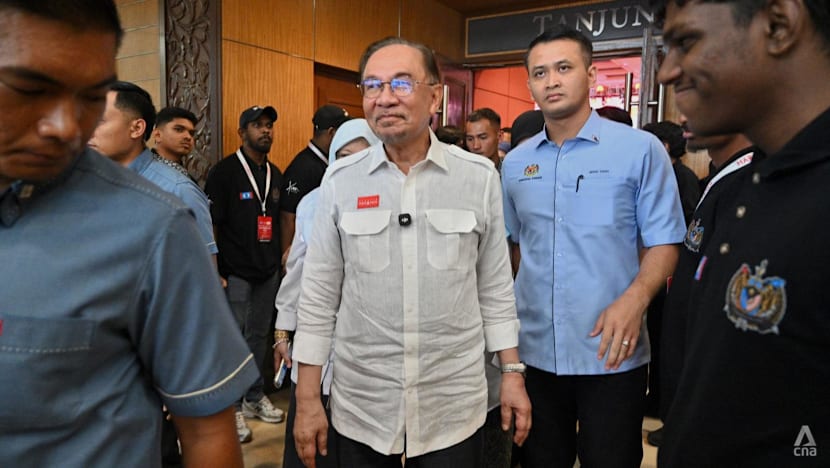 PKR president Anwar Ibrahim at the Pakatan Harapan 2026 Convention at the Johor International Convention Centre in Johor Bahru on May 17, 2026. (Photo: CNA/Zamzahuri Abas)
Anwar himself had warned then that if BN decided to not collaborate in Johor, PH was ready to also contest all state poll seats not only in the southern state, but also in Negeri Sembilan, Selangor, Penang and Pahang - as well as potentially call for a snap general election.
On Friday, Anwar said that he would have preferred Johor to delay its state election by a few months to allow the government to focus on economic recovery and addressing people’s concerns.
“We had time. I felt we should spend these two or three months fully focused on recovery efforts before holding elections. However, because Johor wanted to proceed quickly, we have had to go through the process,” he was quoted as saying by Malay Mail.
Anwar, however, also backed the Negeri Sembilan government’s decision to dissolve the state legislative assembly, saying the move was necessary to prevent prolonged uncertainty amid a crisis involving the state’s monarchy.
Tunku Muhriz still state ruler, says Anwar amid escalating royal succession dispute
On Friday, Prime Minister Anwar Ibrahim also reaffirmed the federal government’s recognition of Tunku Muhriz as the Yang di-Pertuan or ruler of Negeri Sembilan amid an escalating constitutional crisis and claims that a new ruler had been proclaimed.
“Based on the constitutional line of succession as it stands, we continue to recognise Tunku Muhriz as the Yang di-Pertuan Besar of Negeri Sembilan,” he told reporters, as quoted by Malay Mail.
On claims that a new ruler had been proclaimed at a hotel in Melaka earlier on Friday, Anwar said matters involving the monarchy should be handled in a way that preserves the institution’s dignity and public confidence.
“We ask that any differing views be pursued through legitimate constitutional channels without causing public anxiety, complicating state affairs or disrupting the state government,” he added.
Anwar was referring to a ceremony reportedly held at a five-star hotel in Melaka in which Tunku Nadzaruddin Tunku Jaafar, the son of the previous ruler, was proclaimed as the state’s 12th ruler.
Free Malaysia Today reported that the proclamation was made by the Jelebu territorial chief or Undang, Maarof Mat Rashad, on behalf of the state’s four territorial chieftains.
The Seremban High Court on Friday issued a temporary injunction order preserving the status quo amid the state crisis.
The injunction restrains the state’s Council of the Yang di-Pertuan Besar and Ruling Chiefs from meeting or making decisions. It also bars the council from removing its secretary, Raja Norazli Raja Nordin.
The dispute is linked to a system unique to Negeri Sembilan, where the state ruler is elected by a council of four territorial chiefs rather than inheriting the throne through direct hereditary succession.
Under the system, Undangs hold the unique dual power to both elect and depose the ruler.
In an unprecedented move, the four Undangs had tried to topple Tuanku Muhriz on Apr 19, claiming misconduct by him and proposing Tunku Nadzaruddin as his replacement.
Anwar on Friday said that attempts to remove a ruler carry far-reaching implications for the country.
“I do not deny anyone’s right to pursue the matters through the proper legal channels and under the state constitution,” he said.
“However, the arguments put forward must be strong … removing or abolishing any ruler would have very significant implications for the country and its stability.”
The prime minister also said that he supported the dissolution of the state assembly, noting that an election was the best way to “avoid prolonged uncertainty arising from the dispute” surrounding the state’s royal institution.
The state’s territorial chieftains and customary leaders have however formally objected to the dissolution of the state assembly announced by chief Aminuddin Harun on Thursday night.
In a letter sent through their lawyer to the state assembly speaker, the chieftains claimed that the decision was made without their permission as the state co-rulers, local media Malaysiakini reported.
“Should the dissolution of the state legislative assembly proceed, it would give rise to various legal implications, including questions over the validity of the election results and related matters,” read the letter by legal firm Deidra Sharina & Co.
The legal firm is representing the chieftains of Sungai Ujong, Johol, Jelebu and Rembau among others.
In the letter, the chieftains claimed that Aminuddin had violated the state constitution and urged the speaker MK Ibrahim Abd Rahman to take immediate and corrective action, Malaysiakini reported.
Collapse Expand
Aminuddin said in a hastily arranged press conference on Thursday night that the state’s ruler, Tuanku Muhriz Tuanku Munawir, had consented to his request to dissolve the state assembly.
On Apr 27, the 14 UMNO assemblypersons withdrew their support for Aminuddin over his handling of a crisis involving the state’s monarchy, but later said that they would maintain cooperation in the state.
The state monarchy crisis is linked to a system unique to Negeri Sembilan, where the state ruler is elected by a council of four territorial chiefs (Undangs) rather than inheriting the throne through direct hereditary succession.
While Aminuddin had said that he had received the ruler's consent for the dissolution of the state assembly, the Undangs on Friday evening said that the decision was made without their permission as the state co-rulers.
The Election Commission however said that it has received official notification of the dissolution of the state’s legislative assembly.
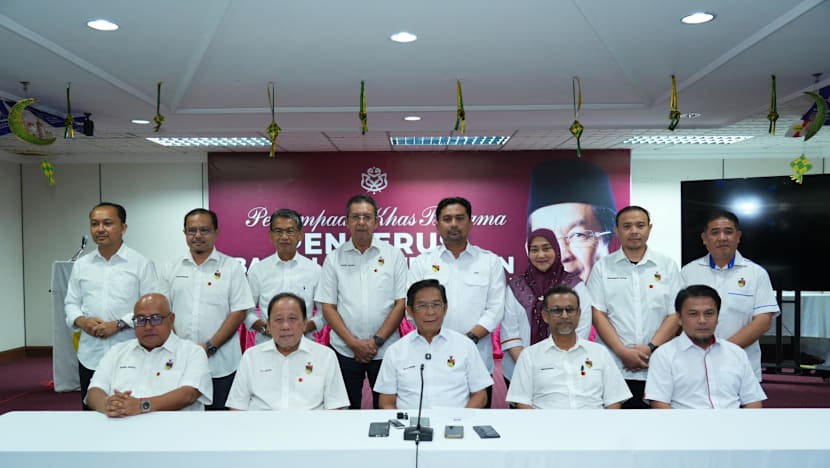 United Malays National Organisation (UMNO) Negeri Sembilan assembly members who announced withdrawal of support for Negeri Sembilan Chief Minister Aminuddin Harun at a press conference on Apr 27, 2026. (Photo: United Malays National Organisation)
TEST FOR ANWAR AND PAKATAN HARAPAN
Analysts say that the upcoming Negeri Sembilan election will also act as a barometer for PH to gauge public support, providing a better indication of how the pact and Anwar may fare in the looming national polls.
While the general election is only due in February 2028, there have been reports that Anwar was considering the possibility of holding snap polls this year.
Political analyst Awang Azman Awang Pawi from Universiti Malaya said that the Negeri Sembilan state election would indicate if the cooperation between PH and BN is still accepted by the grassroots, specifically by UMNO’s Malay voters as well as PH’s supporters who want reforms.
“If there is a quiet protest, spoiled votes, low turnout, or a shift to PN, it is a major warning to the Unity Government,” he said.
Anwar was sworn in as Malaysia’s 10th prime minister on Nov 24, 2022, after the 15th General Election failed to produce a clear winner and resulted in a hung parliament for the first time in Malaysia’s history.
That led to the uneasy alliance between PH and BN. Also in the alliance are Borneo-based blocs.
Azman Awang believed that the results from the Negeri Sembilan state election would have a “psychological effect” on the 16th General Election (GE16), for both PH and BN especially as they were likely to go against one another.
“If PH wins comfortably, Anwar gets a new political lease of life and momentum. On the other hand, if BN wins without PH, they are likely to adopt the same strategy for the general elections. It is a test for both coalitions,” he said.
There are 222 seats in Malaysia’s lower house, with a coalition needing to be backed by at least 112 lawmakers to form the next government.
THE BATTLEFIELD
The state election in Negeri Sembilan this time is likely to see multicornered fights, said observers, who predicted that the situation is “highly volatile”.
They also warned that a hung assembly remains a distinct possibility as coalitions fight to reach the 19-seat threshold for a majority.
Aminuddin had said that PH aimed to contest all 36 seats and had finalised seat distributions among the coalition’s components.
Azmi Hassan said that UMNO is a dominant force in Johor and are confident enough in their grassroots machinery to potentially form the next state government on their own without needing a coalition partner but it is different in Negeri Sembilan where UMNO is not as dominant.
“It might turn out to be the status quo of where UMNO and PH might need to work together again. UMNO is more comfortable in working with PH compared to PN. The question here might be who will get more seats compared to the last state election and get to claim the position of chief minister,” he said.
Ahmad Fauzi agreed, saying that there could be up to five cornered fights that include PH, BN, PN, PKR splinter party Bersama, and a splinter of Parti Pribumi Bersatu Malaysia belonging to a faction loyal to former federal opposition leader Hamzah Zainuddin.
Ahmad Fauzi pointed to a scenario similar to the Sabah elections where candidates with even 30 per cent of the vote could win because of the split votes.
The 17th Sabah state elections in November last year saw multi-cornered contests across the state: four-horse races being the minimum, and one constituency even seeing a 14-way battle.
“If there are no pre-election negotiations to unite two or three factions, it is going to be a wide open contest and the possibility of a hung election is there," said Ahmad Fauzi of the upcoming Negeri Sembilan polls.


 English (US) ·