


 8 months ago
75
8 months ago
75
ADVERTISE HERE

Sagah says early assessment for Year 4 pupils will not cause any harm and will enable timely intervention to better support students’ learning. – Photo by Chimon Upon
KOTA SAMARAHAN (Jan 23): Implementing earlier assessments in school, including the recently introduced evaluation for Year 4 pupils, poses no harm and can help enable timely intervention and better preparation for students.
Sarawak Minister of Education, Innovation and Talent Development Dato Sri Roland Sagah Wee Inn said early assessments allow educators to gauge students’ learning levels sooner, rather than waiting until later stages of schooling.
“There is no harm in gauging students’ levels after Year 3. In a way, it is good because it allows for early intervention,” he said.
Sagah noted that delays in identifying learning gaps could result in missed opportunities to support students at a critical stage.
“If you wait until Year 6, or even Form 3, and only then realise they cannot read or write, it is already too late. Assessing at an early age does no harm,” he added.
He stressed that the assessment is not punitive in nature.
“It does not mean that if you fail, you will be expelled from school. Instead, it gives us a good indicator of what intervention programmes should be provided for the students,” he explained.
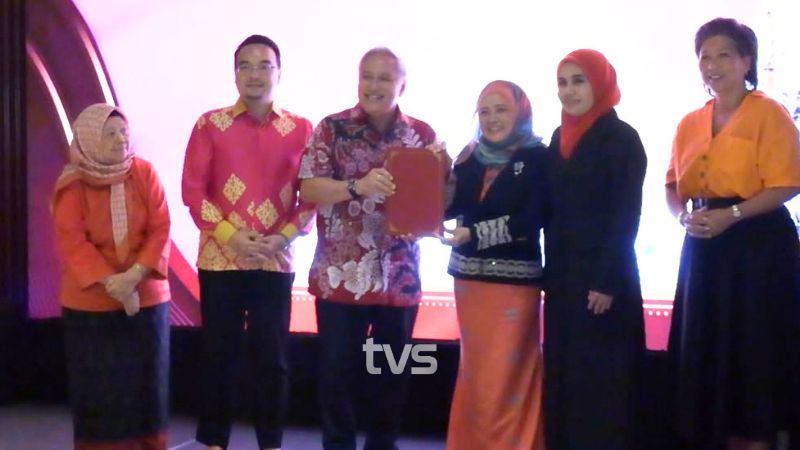
Sagah told reporters this at a press conference after officiating the Token of Completion Ceremony for the first cohort of the SMD Semiconductor-Centexs Digital IC Design Semiconductor Mastery Programme, at the SMD Academy here.
A total of 15 Sarawakians completed the inaugural cohort of the programme.
On a related matter, Sagah said starting school at the age of six would also not cause any harm, noting that it has long been the norm.
“What age did we go to school in the past? Six. Even during British times, schooling started at six years old. I think there is no harm in that,” he said.
He added that children today are generally exposed to learning environments much earlier through preschools and kindergartens.
“Nowadays, there is no reason they cannot catch up. Children attend play schools where they learn to socialise and are exposed to educational games. By the time they are four or five, they are already familiar with such environment,” he said.
Addressing concerns about rural areas, Sagah said efforts have been made to improve access to early childhood education through kindergartens established by Kemas, as well as Sarawak government initiatives under Sedidik.
Meanwhile, on Sarawak’s Dual Language Programme Assessment Test (UP-DLP), Sagah said it would continue despite the implementation of the Year 4 assessment.
“We will still proceed with it. The UP-DLP assessment will be in Year 6, and the results are used, among others, for entry into our international schools. The Year 4 assessment does not affect the UP-DLP,” he said.






 English (US) ·