


 8 months ago
82
8 months ago
82
ADVERTISE HERE

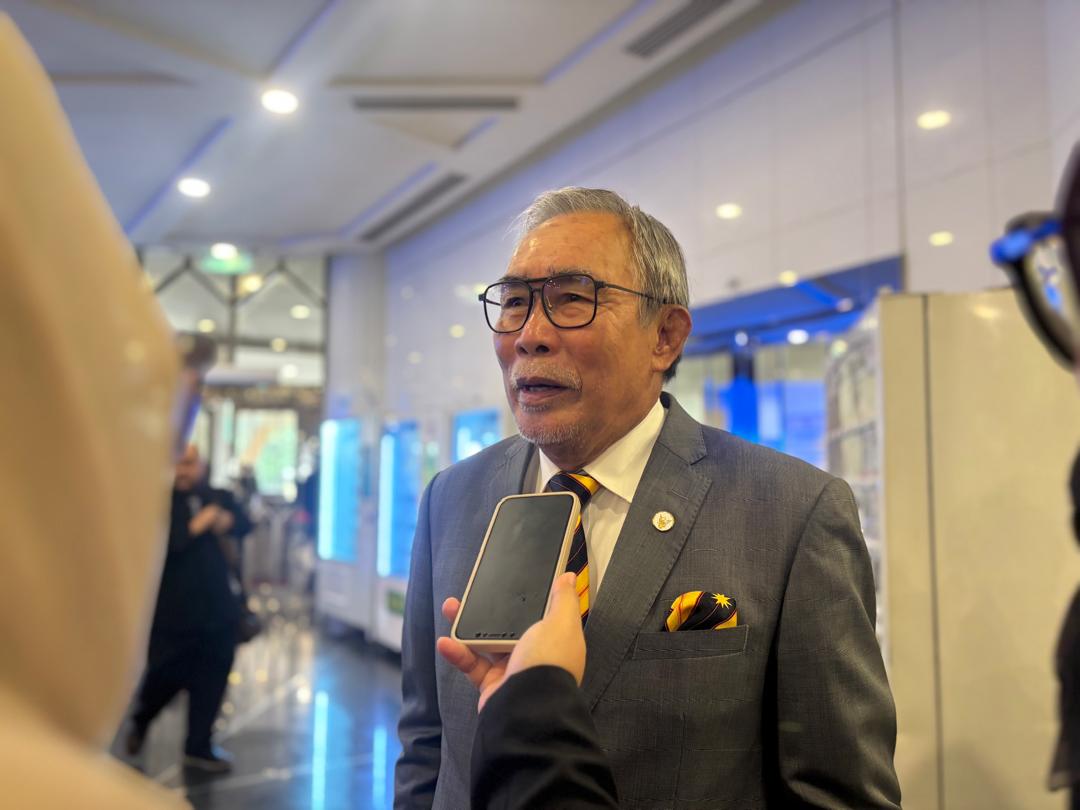
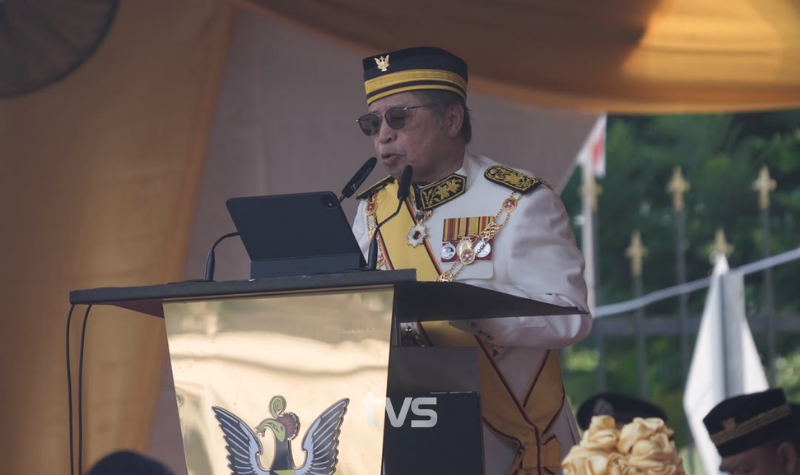
Abang Johari speaks to reporters after officiating the Apace 2026 in Kuching on Tuesday. – Photo by Roystein Emmor
KUCHING (Jan 27): Sarawak plans to acquire small satellite platform CubeSats to support environmental monitoring, forest conservation and land data collection, said Premier Tan Sri Abang Johari Tun Openg.
He said the state government would study the cost implications before moving forward, noting that CubeSats are significantly cheaper than conventional satellites.
“As I mentioned earlier, a conventional satellite costs between €100 million and €300 million, while this one is below €1 million,” said Abang Johari when met by reporters after launching the Asia Pacific Aerospace Conference & Exhibition (Apace) 2026 at the Borneo Convention Centre Kuching (BCCK).
Abang Johari said the initiative would also create employment opportunities, particularly in satellite technology, but stressed that expertise was crucial.
He said about 30,000 satellite technicians would be needed, prompting Sarawak to focus on talent development through education and training.
“That is why at i-CATS, we are collaborating with Tsinghua University and Istanbul Technical University.
“After that, they must understand the latest technologies related to outer space — how high it can fly, all that technical stuff.
“I’m not an expert in the technical details, but I know a little,” he said.
In his keynote address during theApace 2026 launch, Abang Johari said CubeSats represent a disruptive change, noting that larger systems demand massive investment compared to nanosats that can be built in months and launched at much lower cost, thus reducing financial risk.
“Low Earth Orbit satellite operates 160km to 2,000km above Earth, offering low-latency, high-bandwidth communication, Earth observation and navigation.
“These satellites orbit rapidly at about 7.8km per second completing a circle in 90 to 120 minutes, often deployed in large interconnected constellations to ensure continuous global coverage,” he said.
Abang Johari said Sarawak has already begun using satellite data to support forest and natural resources management, agriculture and land-use planning, disaster preparedness, and maritime and coastal monitoring.
“The way forward for Sarawak is for us to expand research in satellite systems, ground operations, data analytics and AI-driven interpretation that can provide
automatic and continuous insights from space.
“It means building the ground stations and fostering the start-ups to turn this stream of data into actionable intelligence for our farmers, our foresters, and our first responders,” he said.
He said this was a strategic imperative for Sarawak, as its unique geography — including rainforests, rivers and a long coastline — is not only challenging to monitor but also its greatest living laboratory for testing, validating and refining the next generation of space-enabled solutions.
“It is a deliberate and disciplined path, aligned with the encouraging government regulations and global industrial trends that are fueling this sector.
“The largest demand for CubeSats services is anticipated to come from the telecommunications sector, which has mostly migrated from ground to space based operations.
“This has become a crucial part of the global infrastructure for communications, commercial and government data transfer, and applications,” he said, adding that environmental and scientific research and metrology are becoming more dependent on data from satellite services.


 English (US) ·