


 8 months ago
101
8 months ago
101
ADVERTISE HERE

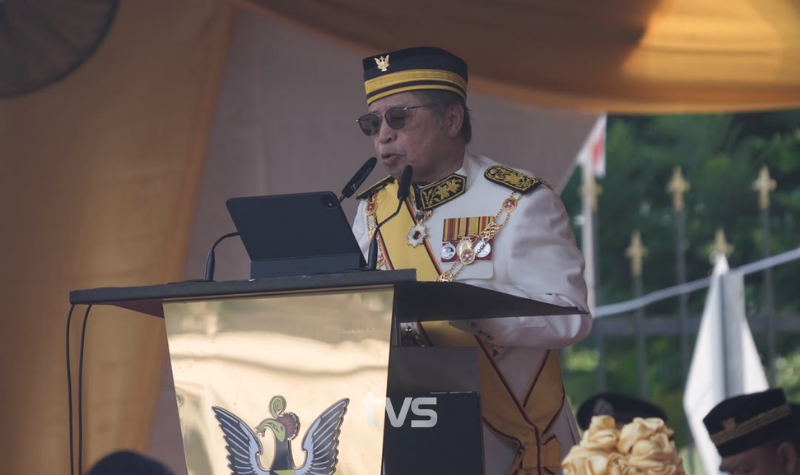
(From right) Omar and Sagah arrive at SK Sungai Duan for the grid project handover ceremony.
MUKAH (Feb 3): A stable electricity supply in rural schools is essential for the effective implementation of Science, Technology, Engineering and Mathematics (STEM) education, as well as the Sarawak Dual Language Programme (DLP), said State Minister for Education, Innovation and Talent Development Dato Sri Roland Sagah Wee Inn.
He said without reliable electricity, efforts to introduce technology-based teaching, digital learning, STEM education and effective English language instruction could not be fully realised.
“A stable electricity supply is a basic prerequisite for modern education.
“Without electricity, it is impossible to implement technology-based teaching, access digital learning resources, nurture STEM education or provide a safe and conducive learning environment,” he said at the handover ceremony of the Sarawak Rural Schools Electricity Grid Connection Project SK Sungai Duan here.
Sagah reaffirmed the Sarawak government’s commitment to ensuring equitable, inclusive and quality education for all students, regardless of location, socio-economic background or geographical challenges.
He emphasised that STEM education is key to producing a scientifically and technologically literate generation, while also enhancing English language proficiency as a language of knowledge, innovation and global competitiveness.
“Both elements are crucial in improving graduate employability, strengthening innovation capacity and supporting Sarawak’s future industrial development,” Sagah added.
To further strengthen language proficiency and STEM education, his ministry has implemented the DLP, allowing Science and Mathematics to be taught in English.
The Sarawak Dual Language Programme Assessment (UP-DLP) serves as a standard mechanism to monitor students’ performance.
According to Sagah, overall results from the DLP and UP-DLP have shown continuous improvement in subject mastery and language skills, while also providing evidence-based data for more effective interventions.
“These include student-focused programmes, enhanced teacher professional development and strengthened teaching strategies to improve learning outcomes,” he added.
On the Sarawak Rural Schools Electricity Grid Connection Project, Sagah said the initiative, which began in 2018 under the 11th Malaysia Plan (11MP), reflects the state government’s sustained commitment to improving basic infrastructure for rural education.
“The project has an approved funding ceiling of RM50 million, with a total project cost of RM38,481,796.71, benefiting 122 rural schools across Sarawak,” he said, adding that the work was divided into five packages covering schools in various rural and remote areas.
Despite delays caused by the Covid-19 pandemic, the project, which commenced in 2020, was successfully implemented in 2025 through strong inter-agency cooperation.
“The scope of work included internal and external electrical wiring as well as connecting schools to the main electricity grid to ensure a stable, safe and sustainable power supply.
“With the completion of this project, our rural schools are now equipped with one of the most essential basic infrastructures to support digital learning and modern teaching methods,” he added.
Also present were State Deputy Minister for Education, Innovation and Talent Development Datuk Dr Annuar Rapaee; Mukah Division Resident Datu Kueh Lei Poh; Deputy Permanent Secretary of the Ministry of Education, Innovation and Talent Development Anielia Siam; Director of the Sarawak Utilities and Telecommunications Ministry Ir Ts Muammah Randie Abdullah; Sarawak Education Department director Omar Mahli; Sarawak Energy senior vice-president for Health, Safety, Security and Environment Marconi Madai; SK Sungai Duan headmaster Jostin Usan; and Sarawak Energy Rural Electrification general manager Nazry Abdul Latip.


 English (US) ·