


 4 months ago
186
4 months ago
186
ADVERTISE HERE
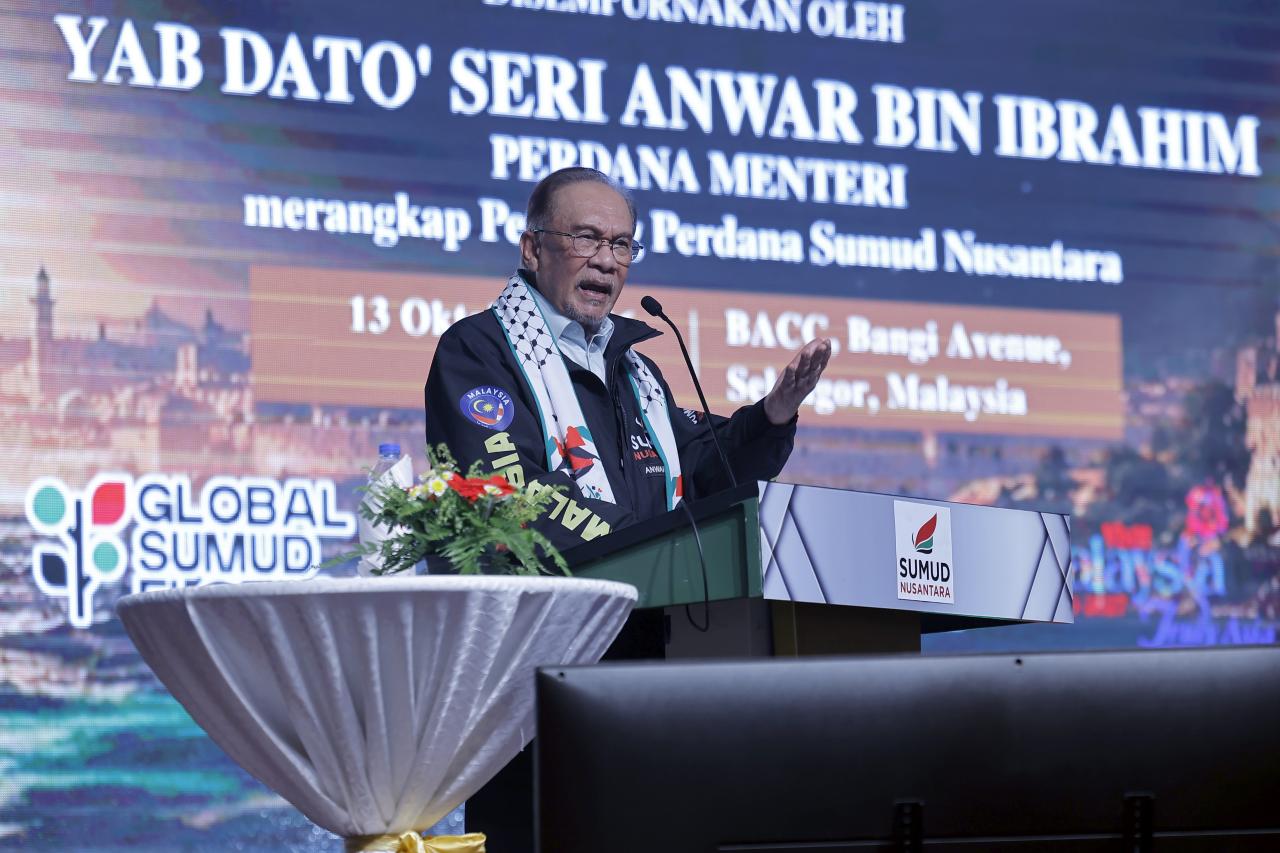
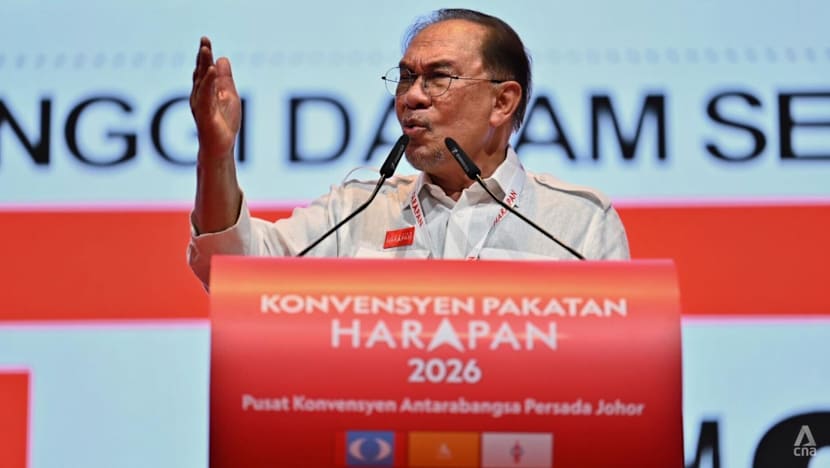 Malaysian premier Anwar Ibrahim is facing his most serious leadership crisis with UMNO, a key component partner, causing calculated fractures in its stronghold states, moves that could push the country toward national snap election.(Photo: CNA/Zamzahuri Abas)
New: You can now listen to articles.

This audio is generated by an AI tool.

KUALA LUMPUR: The United Malays National Organisation (UMNO), forced to play junior power broker since it was ousted from power eight years ago, is flexing its muscles to recalibrate Malaysia’s political equilibrium.
While Malaysia's multi-coalition Unity Government remains intact at the federal level, UMNO is waging selective confrontations in its strongholds that are threatening to expose the fragility of Prime Minister Anwar Ibrahim’s administration.
By forcing snap polls at the Johor and Negeri Sembilan state assemblies, UMNO has dragged the simmering tensions in the Unity Government into the open.
The stakes could not be higher. UMNO’s calculated fractures in Malaysia’s multi-coalition government has placed the prospect of national snap polls at the worst possible moment - amid serious economic headwinds and factional troubles within Anwar’s own party.
UMNO’S RETURN TO DOMINANCE?
UMNO’s machinations cut to the heart of a single question: Can the country’s first multi-coalition government, headed by PM Anwar, survive? Or does it signal the beginning of UMNO’s return to dominance?
UMNO, which leads the Barisan Nasional (National Front) coalition, ruled uninterrupted since independence in 1957 until it collapsed in the 2018 general election. That defeat triggered a political free-for-all, with three premiership changes in four years, backroom deal-making and shifting alliances that had paralysed the country.
Stability only returned after the Nov 2022 inconclusive general election when the UMNO-led BN lent its support to Anwar’s Pakatan Harapan (PH) coalition that emerged with the largest single political bloc in parliament.
That led to the formation of a so-called Unity Government, a multi-coalition alliance comprising 19 political parties in Peninsular Malaysia and the east Malaysian states of Sabah and Sarawak.
UNITY THAT NEVER WAS
But Anwar’s Unity Government has never really been united.
It was an arrangement that came together because of parliamentary arithmetic that offered UMNO a political lifeline - and then some.
With only 24 parliamentary seats, UMNO politicians head seven key cabinet portfolios as full ministers, including rural development, defence and foreign affairs, and another five positions as deputy ministers.
It is a disproportionate share compared with the Democratic Action Party - Anwar’s main ally in the PH coalition with 40 parliamentary seats - which only has five full cabinet positions and six deputy cabinet positions.
But UMNO, a ruthless machine and the most seasoned of Malaysia’s political institutions, played the long game.
For three years, UMNO leaders stayed coy and smiled for the cameras.
The cordial relations with Anwar’s PH coalition also saw the UMNO leaders secure other breaks. Most notable was the decision by Malaysia’s Attorney General Mohd Dusuki Mokhtar early this year to drop the corruption case against UMNO president Ahmad Zahid Hamidi, who is also one of the country’s two deputy premiers.
Though the move raised eyebrows in legal circles and triggered speculation of political interference, Mohd Dusuki stressed at the time that the decision was made after an extensive review of the case and noted that there was no need to continue with the trial.
ANWAR-ZAHID TANGO; A SOURCE OF DISQUIET
Anwar’s dalliance with Ahmad Zahid, and UMNO has long been a source of disquiet among his PH coalition partners.
That unease has become more palpable in recent months, particularly after news reports surfaced that Ahmad Zahid had held a secret meeting in mid-December 2025 with key leaders from the ethnic Malay parties in the opposition, including the right wing Parti Islam SeMalaysia (PAS) and Parti Pribumi Bersatu Malaysia (Bersatu).
Anwar was only alerted to the meeting after his Home Minister, Saifuddin Nasution Ismail, was informed about the secret Bangkok huddle by the Thai intelligence.
Ahmad Zahid would later acknowledge the meeting, claiming that it was “no secret” and that Anwar had been informed that the meeting was over negotiations about “Muslim unity”.
But the optics of the Bangkok meet were seriously wounding for Anwar allies who have long put up with the premier’s indulgence towards UMNO: How could a crucial Unity Government leader secretly consort with the opposition while sitting in Anwar’s cabinet?
The Bangkok meeting was also a clear signal that UMNO was testing the waters for a new alignment - steer Malaysia politics back along ethnic and religious lines and leave Anwar’s multi-racial coalition in the dust.
Ahmad Zahid has made no secret about UMNO’s plans for a “grand collaboration” of Malay-Islamic parties - a not-so-veiled threat that UMNO retains the option of realigning with PAS, which currently has 43 seats in Parliament, should the Unity Government become electorally unrewarding.
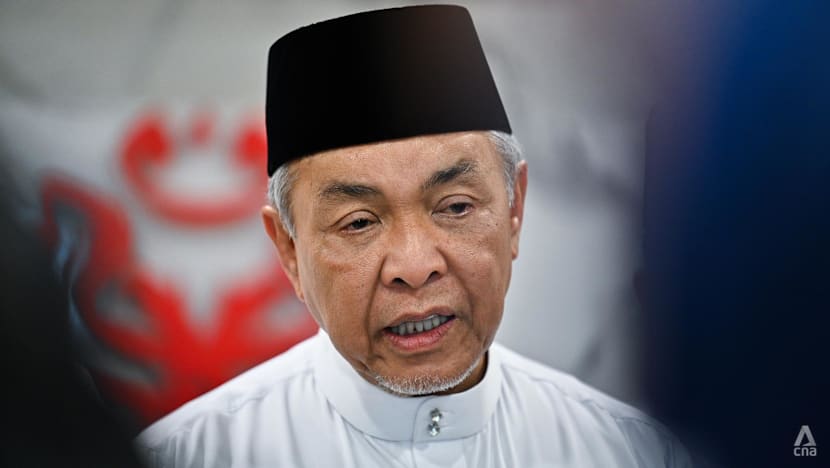 Deputy Prime Minister and UMNO president Ahmad Zahid Hamidi has emerged as a serious thorn in the side of the Anwar administration as he pushes new alignments with the country's opposition parties, moves that are undermining Malaysia's Unity Government.(Photo: CNA/Zamzahuri Abas)
In recent weeks, PM Anwar has been forced to weigh in on UMNO’s calculated fractures to his Unity Government.
At a PH convention on May 17 in the Johor capital of Johor Bahru, Anwar declared his government’s readiness to “fight seriously” and characterised the UMNO-led Barisan Nasional (BN) manoeuvres as approaching betrayal. He also raised the spectre of calling nationwide snap polls, which are not due until February 2028.
But Anwar’s tough words have not stopped UMNO from flexing its muscles through the sequential dissolutions of Johor and Negeri Sembilan state assemblies this week.
WHY NOW?
The term of Johor state assembly only expires in April 2027.
But on Jun 1, Chief Minister Onn Hafiz Ghazi dissolved the assembly after an audience with the Acting Sultan of Johor, Crown Prince Tunku Ismail Sultan Ibrahim. UMNO and BN also declared that the coalition would contest in all the 56 seats, effectively treating PH alliance parties as electoral adversaries.
The electoral mathematics in Johor favour UMNO’s aggressive positioning for the upcoming polls that must be called in 60 days.
Before the dissolution, UMNO dominated the state assembly with a two-thirds majority through the 40 seats under its control.
Typically, standalone state elections produce lower voter turnout (only 54 per cent in the last state polls in 2022) and disproportionately benefit incumbent machinery and established party structures.
Against this backdrop, UMNO sources said the party is also considering declaring snap elections in neighbouring Melaka, another stronghold which must dissolve the state assembly before December.
By accelerating the contests in these two states rather than allowing them to proceed to their natural deadlines, UMNO effectively denies Anwar PH the time to consolidate its organisational presence in the party’s traditional bastions.
THE NEGERI SEMBILAN DIMENSION
Unlike Johor, Negeri Sembilan - which dissolved its 36-member state assembly on Friday (Jun 5) - was jointly run by two separate political coalitions PH and BN, replicating a power-sharing model of the federal unity government.
The term of Negeri Sembilan assembly only expires in November 2028, but state administration was plunged into crisis when UMNO’s 14 state assemblymen withdrew their support for the PH administration that has 17 representatives, two short of a majority to govern.
PH had originally decided to continue running the state administration with a minority government. But after UMNO declared that it was considering snap polls in Johor, Anwar’s PH decided that it would seek a fresh mandate in Negeri Sembilan in a tit-for-tat response.
By breaking its electoral pact in the state, UMNO has opened a crucial second front to its increasingly aggressive political campaign and expanded the battlefield to test its political standing.
Like in Johor, a free for all is expected in Negeri Sembilan, which also must hold fresh polls in the next 60 days. PH Chief Minister Aminuddin Harun declared this week that his party would contest in all 36 seats, setting the stage for direct challenges with UMNO.
WHAT IT ALL MEANS FOR ANWAR
For Anwar, his dilemmas are acute.
UMNO’s belligerence is coming at a time when his government is facing a number of compounding vulnerabilities both on the economic and political fronts.
The ongoing fuel subsidy conundrum - estimated to cost the government RM7 billion monthly - has been exacerbated by the global energy market instability. It presents an economic policy nightmare where any subsidy reduction would alienate ordinary Malaysians, particularly the majority ethnic Malay community. Sticking with subsidies, on the other hand, would strain already stretched government finances.
Anwar’s own party, Parti Keadilan Rakyat (PKR), is also floundering. PKR is a component party of PH.
In mid-May, on the same day that Anwar addressed the PH convention in Johor, former Economy Minister Rafizi Ramli and former Natural Resources Minister Nik Nazmi Nik Ahmad announced that they were quitting the PKR and taking over a fringe Malaysian United Party (Mersama) as their new vehicle.
The blow of losing Rafizi, who was once PKR’s deputy president and widely seen as the party’s most effective campaign strategist, will be tested in the coming state assembly elections when PH does battle with UMNO.
Apart from his party bleeding talent, Anwar must also quickly confront how he deals with Ahmad Zahid and UMNO.
Should he allow them to walk away unscathed, UMNO will continue to expand on its state-level unilateralism and enjoy the perks of being a partner of Unity Government at the Federal level.
For now, Anwar has been cornered with a few options.


 English (US) ·