


 8 months ago
59
8 months ago
59
ADVERTISE HERE

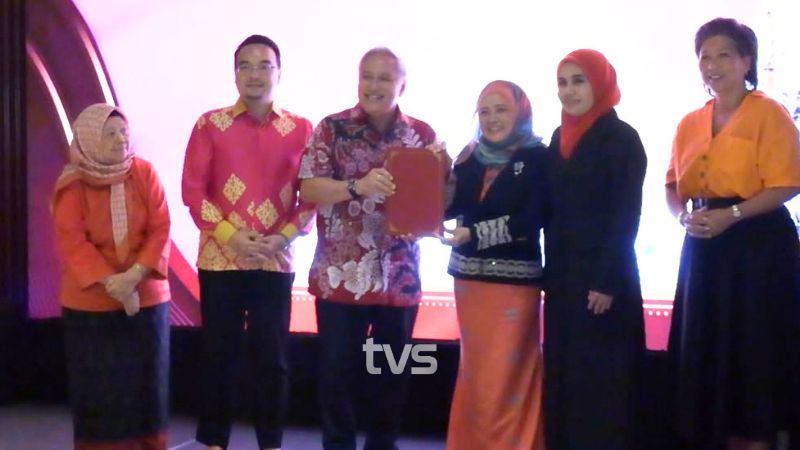
Abdul Karim (centre) in a photocall with other distinguished guests during the programme including (from right) Morris and Green.
KUCHING (Jan 24): Well-researched and responsibly interpreted cultural heritage plays a key role in driving tourism growth, strengthening the creative industry, and supporting sustainable development in Sarawak, said State Minister of Tourism, Creative Industry and Performing Arts Dato Sri Abdul Karim Rahman Hamzah.
Speaking at the ‘Interpreting Borneo in Britain and Sarawak’ special talk at the Borneo Cultures Museum (BCM) auditorium, he said initiatives such as this project demonstrate how heritage research can directly contribute to the state’s broader development agenda.
“From the perspective of the Sarawak government, efforts like these resonate strongly with our broader development agenda.
“Culture and heritage are integral components of our tourism strategy, our creative industry aspirations, and our commitment to sustainable development.
“Well-researched, responsibly interpreted heritage enhances Sarawak’s global profile, attracts cultural tourism, and strengthens our sense of identity as a diverse and dynamic society,” he said.
Abdul Karim added that museums today are no longer merely repositories of objects, but have evolved into spaces for dialogue, reflection, and knowledge exchange.
“In Sarawak, we have consciously embraced this evolving role. The establishment of the Borneo Cultures Museum symbolises our aspiration to position Sarawak as a regional centre for research, cultural diplomacy and international collaboration,” he said.
The programme was also attended by representatives from the British Museum, including Dr Alexandra Green, S.P. Shaw Curator for Southeast Asia, and Dr Jennifer Morris, Borneo Research Fellow and Henry Ginsburg Curator for Island Southeast Asia.
Abdul Karim highlighted that the project was inspired by research initiated in Sarawak during the early development of BCM.
“This demonstrates how sustained scholarly engagement can evolve organically into deeper institutional partnerships, benefiting not only museums, but also researchers, students, communities and the wider public,” he said.
He also emphasised the strengthened relationship between the Sarawak Museum Department and the British Museum, formalised through a Memorandum of Understanding (MoU) signed in November 2024.
“This MOU provides a clear framework for continued collaboration in research, collections-based studies, capacity building, and knowledge exchange.
“More importantly, it reflects a shared understanding that cultural heritage must be approached with integrity, transparency, and mutual respect,” he said.
The collaborative work has focused on sharing information related to the Charles Hose collections, held in Kuching and in museums across the United Kingdom.
“Such efforts are vital in reconstructing the broader historical and cultural contexts in which these collections were formed, acquired and preserved,” he said.
Abdul Karim noted the importance of community engagement, citing activities in the Baram region last year that reconnected museum collections with their source communities.
“Heritage research must not be extractive in nature; it must be reciprocal, inclusive and grounded in respect for local knowledge and lived experience,” he said.
He also welcomed the successful digitisation of the British Museum’s Charles Hose photographic collection, describing it as an important step in improving access to heritage materials.
“By making these materials available online, the project has created an invaluable public resource that will support future research into Sarawak’s history, anthropology and cultural landscapes,” he said.
Abdul Karim expressed confidence that the programme would deepen understanding of the Charles Hose collections and open new avenues for future cooperation between Sarawak and international partners in cultural heritage research.


 English (US) ·