


 8 months ago
86
8 months ago
86
ADVERTISE HERE

A MMEA vessel patrolling the waters along the Sarawak coastline. — Photo from MMEA
KUCHING (Jan 17): Protecting Malaysia’s sovereign interests across its Exclusive Economic Zone (EEZ) must remain a top priority as the nation faces growing maritime security, environmental, and geopolitical challenges, said retired United States Coast Guard (USCG) Vice Admiral Peter Williams Gautier.
He said Malaysia, as a maritime nation with extensive sea borders, faces increasing pressures that directly test its ability to govern and enforce its rights at sea.
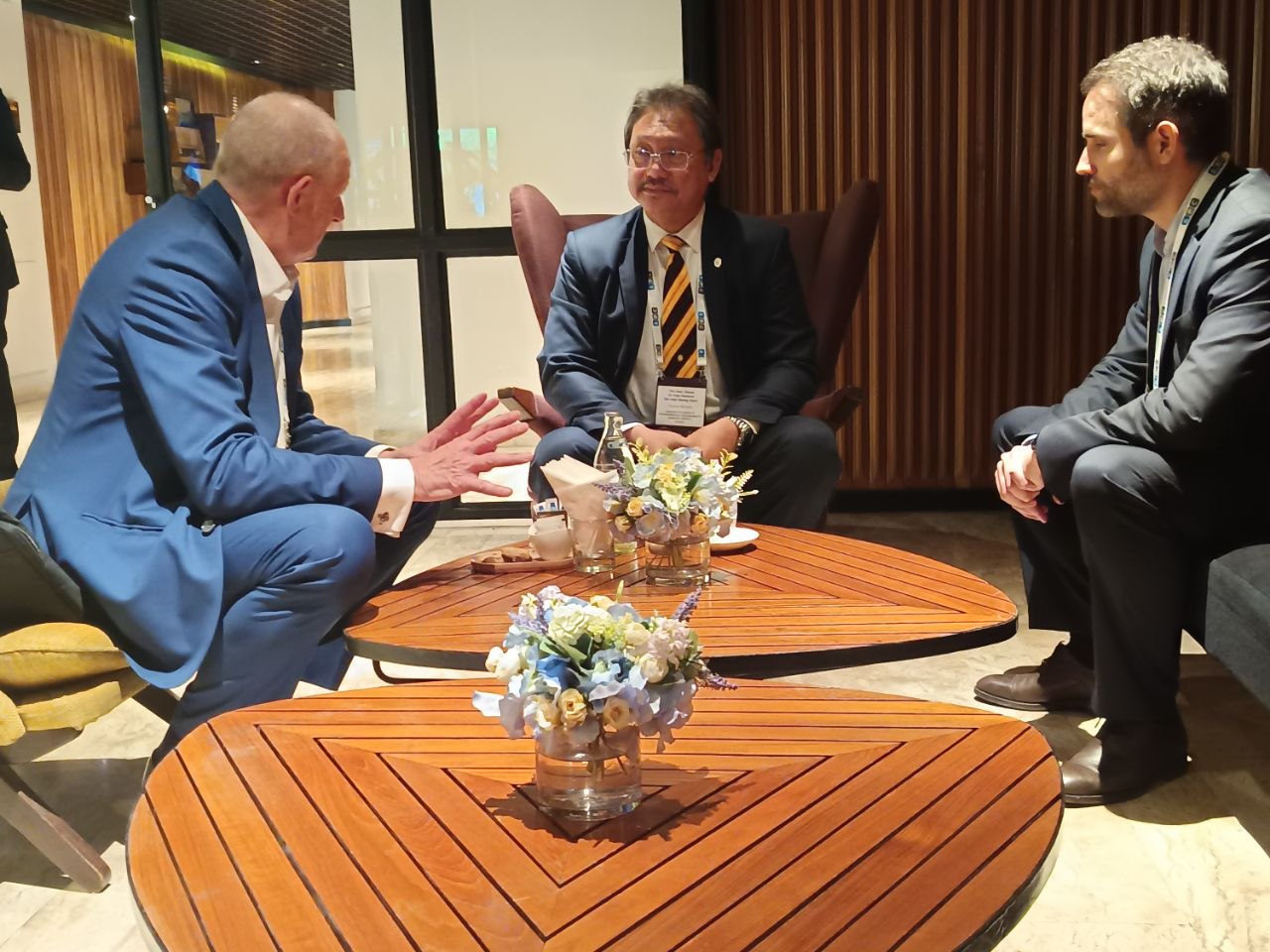
“Malaysia is a maritime nation with broad, wide-ranging maritime borders, just as the United States has. First and foremost, it is important to make sure there is a strong basis in maritime law for enforcement efforts,” he told The Borneo Post in an exclusive interview.
During his visit, he noted that Sarawak has already implemented several laws to support the enforcement work of the Sarawak Coast Guard.
Gautier, who retired last September after a 42-year USCG career, said the sheer size of Malaysia’s EEZ presents both opportunities and vulnerabilities.
“Recognising the fact that you have an enormous exclusive economic zone gives opportunities for things like illegal fishing from foreign fishing interests that might have incursions into your waters, from smuggling of illegal narcotics, from smuggling of people, and from smuggling of other illicit goods into Malaysia,” he said.
He stressed that safeguarding sovereign interests requires governance that extends beyond land borders.
“To ensure Malaysia and Sarawak’s governance of maritime areas, you need to push out your land borders into your maritime borders because many threats come from the sea.
“Making sure that your sovereign interests are enforced in your waters is really important,” he said.

Peter Williams Gautier
Threats, he added, are not limited to criminal activity. Environmental and economic risks from increased maritime activity are also pressing concerns.
“The increase in commercial shipping and offshore oil and production always has the risks of pollution in the maritime environment that can impact coastal communities and their livelihoods,” he said.
Gautier also highlighted rising geopolitical tensions in the South China Sea, describing it as one of the world’s most contested maritime regions.
“One thing we think about a lot in the US Coast Guard is the fact that the South China Sea itself is now a contested water, more contested than it has ever been since the end of World War II,” he said, attributing much of the friction to the actions of the People’s Republic of China (PRC).
He cited incidents involving the Philippine Coast Guard and local fishing communities as examples of challenges that undermine coastal states’ sovereign rights.
On strengthening Malaysia’s ability to protect its EEZ, Gautier emphasised maritime domain awareness supported by technology.
“The rapid developments in technology provide huge opportunities to make sure that sovereign interests are represented and enforced in your waters.
“Advances ranging from satellite detection and communications to artificial intelligence give all nations and coast guards an opportunity to develop their maritime domain awareness,” he said.
While patrol vessels, aircraft, and offshore cutters remain vital, he noted that technology enables these assets to be deployed strategically.
“You can’t be everywhere all the time. Using technology and sensors gives you the opportunity to understand what’s happening in your exclusive economic zones and navigable waterways, so that your physical assets, boats, cutters, offshore ships and aircraft, can respond more effectively and at the right time,” he added.


 English (US) ·