


 2 weeks ago
39
2 weeks ago
39
ADVERTISE HERE
CO2 is no longer just an issue of climate change, but it has the potential to be a new economic asset capable of generating investment, creating thousands of jobs and at the same time strengthening forest conservation efforts in Sarawak.
With a vast forest area, in addition to the ecosystem of mangrove forests and peatlands, Sarawak has the natural advantage of emerging as one of the major players in the carbon economy in the Asian region.
However, that opportunity comes with no less responsibility, particularly in ensuring that each carbon credit generated truly represents a legitimate and verifiable reduction or storage of carbon.
Carbon is all around us.
Carbon actually exists naturally in human life, including the body, oceans, soil, plants and atmosphere.
Fellow of the Institute of Renewable and Renewable Energy (ISuRe), University of Malaysia Sarawak (UNIMAS), Prof. I'm going to see Dr. Al-Khalid Othman said, society needs to understand that carbon itself is not an enemy.
 Fellow of the Institute of Renewable and Renewable Energy (ISuRe), University of Malaysia Sarawak (UNIMAS), Prof. I'm going to see Dr. Al-Khalid Othman. Photo by UNIMAS
Conversely, the problem arises when carbon dioxide is released in excess and contributes to climate change.
"Carbon is actually everywhere, in our bodies, in the oceans, on land and in plants. Carbon is not a problem but it plays an important role in life systems", he said.
He says that if there's too much carbon dioxide in the atmosphere, heat will get trapped and the Earth will become warmer.
On the other hand, too little carbon can cause the earth to become too cold.
So, the real issue is not eliminating carbon, but making sure that emissions are at a controllable level.
Daily activities also produce carbon.
The issue of carbon is not just about big industries either.
Electricity consumption, driving, purchasing goods, waste disposal and the use of industrial products all have to do with carbon emissions.
Burning coal to generate electricity and fuel consumption by vehicles, for example, produces carbon dioxide which is among the contributors to climate change.
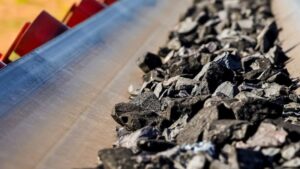 Burning coal to generate electricity and fuel consumption by vehicles, for example, produces carbon dioxide which is among the contributors to climate change. Decorative photos of Envato
Al-Khalid said it shows that carbon is not just a scientific issue, but is closely related to everyday human life.
The Paris Agreement cuts off the carbon economy
The importance of carbon has increased significantly since the Paris Agreement in 2015 when countries around the world increased their commitments to tackle climate change and reduce greenhouse gas emissions.
The development also saw carbon begin to have economic value through a mechanism of carbon trade.
Through the system concerned, efforts to reduce or conserve carbon can be translated into market-valued carbon credits.
Al-Khalid said, basically, one tonne of carbon dioxide successfully reduced or saved can be equivalent to one carbon credit, subject to the methodology and standards used.
Carbon credits can be as low as $100.
Carbon credit values have the potential to deliver a large economic return, depending on market conditions and demand.
According to Al-Khalid, the price of one carbon credit in the market could potentially reach between USD50 and USD100, thus showing the economic value that can be derived from carbon reduction and storage activities.
He said the development of exchange markets related to carbon trade opens up space for carbon credit being valued at higher prices, depending on current market as well as quality and credibility of the credits generated.
"The value of carbon credits depends on the market, but it can range from USD50 to USD100 per credit", he said.
That value potential makes carbon no longer just an environmental component, but an economic asset that can attract new investment.
Sarawak on strategic ground
Sarawak's position in the industry has also been strengthened through the state legislative framework related to carbon trade, as well as supporting initiatives at national level since 2022.
The move puts Sarawak on a strategic foundation to develop its carbon industry more systematically, particularly by leveraging the rich natural resources that the state has.
For Sarawak, the opportunity is seen as greater because the state has a large forest area, besides rainforests and peatlands.
Sarawak has a natural carbon bank
All of these ecosystems have the ability to absorb and store carbon dioxide.
According to Al-Khalid again, the situation gives Sarawak a large capacity to develop what can be described as a natural 'carbon bank'.
He said trees absorb carbon dioxide from the atmosphere and store carbon in biobodies as well as soil.
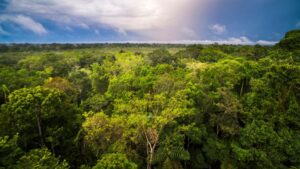 He said trees absorb carbon dioxide from the atmosphere and store carbon in biobodies as well as soil. Decorative photos of Envato
Thus, forest conservation is no longer merely concerned with conservation, but can be part of a green economic strategy.
The peatlands are important assets of Sarawak
Among the main advantages of Sarawak are areas of peatland that have the potential to store carbon over a long period.
The capacity makes the area a strategic asset in the development of the carbon storage sector.
"Because of the land in Sarawak, especially peatlands, Sarawak can be a major player in carbon storage in Asia and around the world because such areas can absorb and store carbon underground for long and safe periods", he said.
However, that potential needs to be exploited carefully so that economic activity does not affect the ecosystems that underlie carbon storage itself.
The technology opens up new industries
Besides the natural carbon bank, there's another approach that is to use technology.
These include carbon capture, use and storage (CCUS) which allows carbon dioxide from industrial activities to be captured, processed and stored in the appropriate location.
According to Al-Khalid, technological developments have the potential to create new industries in Sarawak.
The industrial chain can include carbon capture, processing, storage and transportation.
The combination of natural assets and modern technology could thus strengthen Sarawak's position in the carbon economy.
Carbon credits have to be verified
However, the development of carbon trade cannot be separated from the question of credibility.
Industry can't just claim that they have reduced or saved a certain amount of carbon.
On the contrary, the claims must go through a measurement, reporting, audit and verification process.
"This is a very important matter. We don't want the industry to claim that they have reduced carbon dioxide and also saved it. The audit process must be done as efficiently as possible and requires expertise", he said.
The verification process, he says, is critical to ensuring that every carbon credit traded truly has a scientific and technical foundation.
'Greenwashing' is a threat to the carbon economy
If the audit process is not transparent, another risk can arise: greenwashing.
Greenwashing refers to industrial actions that build images as if they were practicing green operation, whereas the actual production process still produces carbon emissions.
According to Al-Khalid, that can happen when environmental claims are not supported by a robust audit process.
Therefore, the carbon market requires expertise in carbon methodology, emissions calculation, auditing and validation.
5,000 to 10,000 new jobs
In addition to environmental issues, the carbon economy also offers great job opportunities.
Al-Khalid estimates that between 5,000 and 10,000 new job opportunities could be created in Sarawak for the period 2026 to 2030.
Among the fields needed are carbon methodology experts, auditors, market analysts of carbon trading, carbon storage geologists and workforce in data management and carbon accounting.
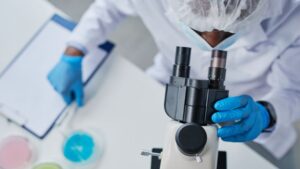 The fields required are carbon methodology experts, auditors, carbon trading market analysts, carbon storage geologists as well as workforce in data management and carbon accounting. Decorative photos of Envato
The development shows that the carbon economy is capable of creating jobs that were previously little known in the job market.
TVET also benefits
That opportunity isn't just for the professionals.
The TVET field also has a large space in the carbon economy including drone technicians, drone pilots, drone method regulators, IoT sensor operators and biogas technicians.
The use of drones and sensors can help forest monitoring, data collection and detection of ecosystem changes.
This makes the carbon economy a sector that requires a workforce of multiple skill levels.
Carbon logistics will grow
Another area that could potentially emerge is carbon logistics.
If carbon dioxide from overseas industry is to be shipped to Sarawak for storage purposes, a dedicated transport and handling system is required.
That could create new industrial chains including transportation, storage, monitoring and carbon management.
Sarawak not only has the potential to be a storage location, but can also develop a complete industrial ecosystem around the carbon sector.
Rural communities are not left behind.
The economic benefits of carbon can also be extended to rural communities.
The communities living near the forest and buckwheat areas can be trained as forest rangers, guides, buckwheat supervisors and plantation site workers.
Replanting and ecotourism activities can also be developed as a source of community income.
The approach ensures that the local community is not only a conservationist, but also receives economic benefits from conservation efforts.
UNIMAS strengthens local expertise
In addition, UNIMAS through ISuRe also plays a role in the development of expertise related to this carbon economy.
 In addition, UNIMAS through ISuRe also plays a role in the development of expertise related to this carbon economy. Photo by UNIMAS
Al-Khalid said the institute has expertise and research fellowships developed to acquire competence in carbon credit calculation and carbon audit processes.
The expertise can help state governments and industry ensure that the development of the carbon sector is carried out on the basis of proper measurement and verification methods.
Carbon is not an enemy.
In the end, carbon is not a human enemy.
What we need to control is the excess carbon emissions.
For Sarawak, the situation opens up a unique opportunity when environmental assets such as forests, bogs and peatlands potentially form the basis of new economic sectors.
However, the development of a carbon economy needs to go hand in hand with environmental conservation.
If implemented with transparency, science-based and community involvement, carbon trade and storage can attract green investments, create jobs and at the same time ensure that Sarawak's natural treasures are maintained.
As Al-Khalid has asserted, the future of a green economy belongs not only to industries that sell carbon credits, but also to communities that care about the environment.







 English (US) ·