


 1 week ago
24
1 week ago
24
ADVERTISE HERE
IN a city where first impressions are often shaped by sweeping highways, monumental architecture, glass towers and a desert landscape stretching beyond the urban skyline, stepping into The National Aquarium Abu Dhabi offers an altogether different perspective of the emirate.
Here, attention turns away from what has risen above the sand and towards the waters that have shaped life along this coast for generations.
Located at Al Qana, a waterfront leisure and entertainment destination in the Rabdan area, the aquarium is home to some 46,000 animals representing more than 300 species.
Its collection is spread across 10 themed zones designed to take visitors from the familiar waters and maritime traditions of the United Arab Emirates (UAE) to vastly different ecosystems around the world.
Rather than presenting its collection simply through a succession of tanks, the attraction builds the experience around a journey.
Lighting, sound and recreated environments change as visitors move from one zone to another, while smaller displays unexpectedly give way to enormous underwater spaces where sharks, rays and schools of fish pass within metres of the glass.
It is the kind of environment that immediately captures the attention of younger visitors, including my one-year-old son Rafael, whose assessment of almost everything moving behind the glass remained wonderfully uncomplicated.
“Fish, fish, fish,” he repeatedly exclaimed, pointing towards one exhibit before quickly turning his attention to whatever creature appeared next.
For adults, however, there is considerably more to unpack.
Behind the visual spectacle is a broader story about Abu Dhabi’s relationship with the sea, the changing role of modern aquariums and efforts to turn an attraction designed for tourism and entertainment into a space where conservation and education are equally visible.
Beginning close to home
The journey appropriately begins with the UAE’s Natural Treasures, a section that draws visitors into the maritime history of a country now internationally recognised for aviation, energy, tourism and ambitious urban development.
Long before that transformation, fishing, pearling and trading communities depended heavily on the Arabian Gulf, with the sea providing food and income while also serving as an important transportation route connecting communities with the wider region.
Before oil transformed the Emirates and cities such as Abu Dhabi expanded at extraordinary speed, life along the coast was therefore inseparable from the water.
Beginning the aquarium experience with that history establishes an important connection between the natural environment displayed inside and the society that developed along the coast outside.
From there, the experience expands far beyond the Gulf, taking visitors through zones including Red Sea Wreck, Atlantic Cave, The Sub, Ring of Fire, Ocean Magic, Frozen Ocean and Flooded Forest.
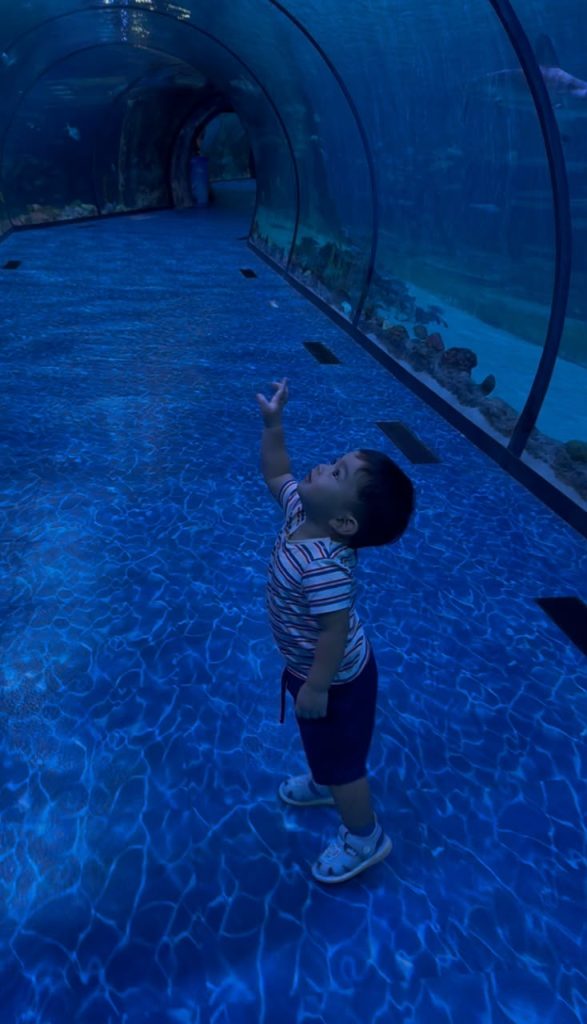 Rafael soaks in the view at the underwater tunnel.
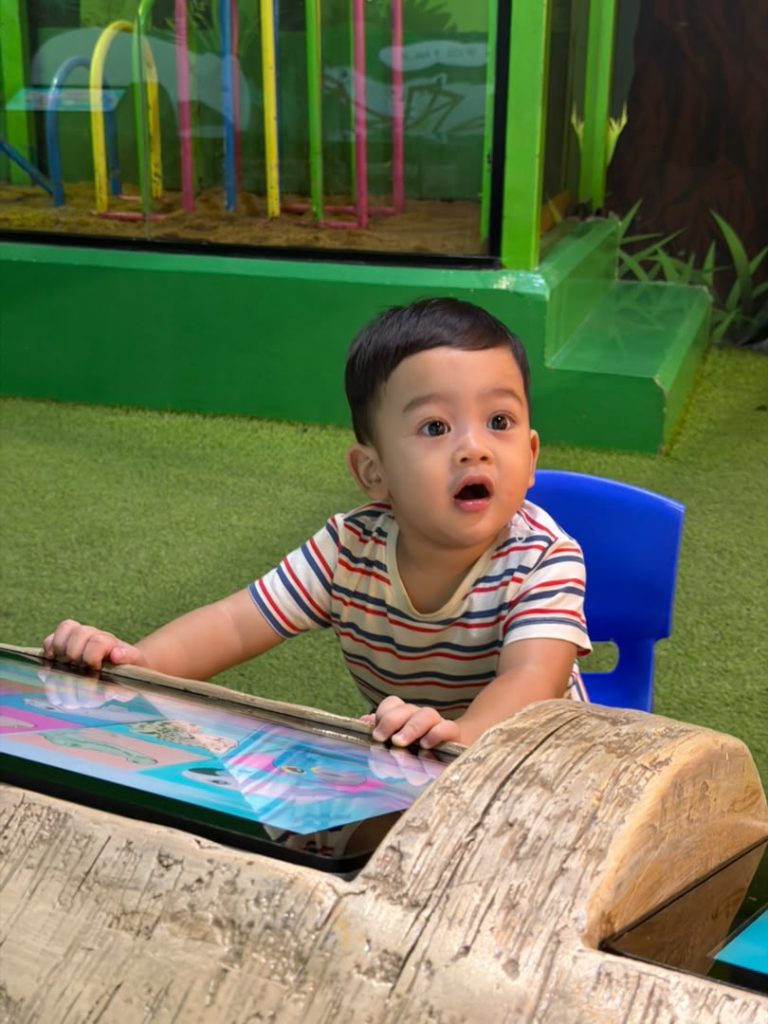 Rafael plays on the interactive screen at the Snakes and Ladder Zone.
Each transition brings changes in atmosphere and species as the journey moves between warm tropical waters, darker underwater environments, freshwater habitats and ecosystems far removed from the desert climate of Abu Dhabi.
Among the aquarium’s most visually impressive features is its underwater tunnel, where the experience shifts from looking into an aquatic environment to seemingly standing within one.
Marine life passes above and around visitors, making the scale of some of the larger inhabitants much easier to appreciate.
Sharks are inevitably among the animals that command the most attention, particularly when they glide close to the viewing panels.
Yet the quieter moments can be equally captivating, whether watching rays move almost effortlessly through the water or observing enormous schools of smaller fish change direction simultaneously.
A wider world than expected
Despite its name, The National Aquarium is not confined entirely to marine life.
Reptiles, amphibians, birds and other animals appear as the journey moves into habitats such as the Flooded Forest, reinforcing the idea that rivers, oceans and wetlands cannot be understood separately from the wider ecosystems they support.
This diversity gives the attraction a different rhythm because visitors never quite know what will appear around the next corner.
The carefully recreated environments also make it possible to travel between ecosystems that, in reality, would be separated by thousands of kilometres, all within the space of an afternoon.
For families, particularly those travelling with young children, this variety means the aquarium works on several levels.
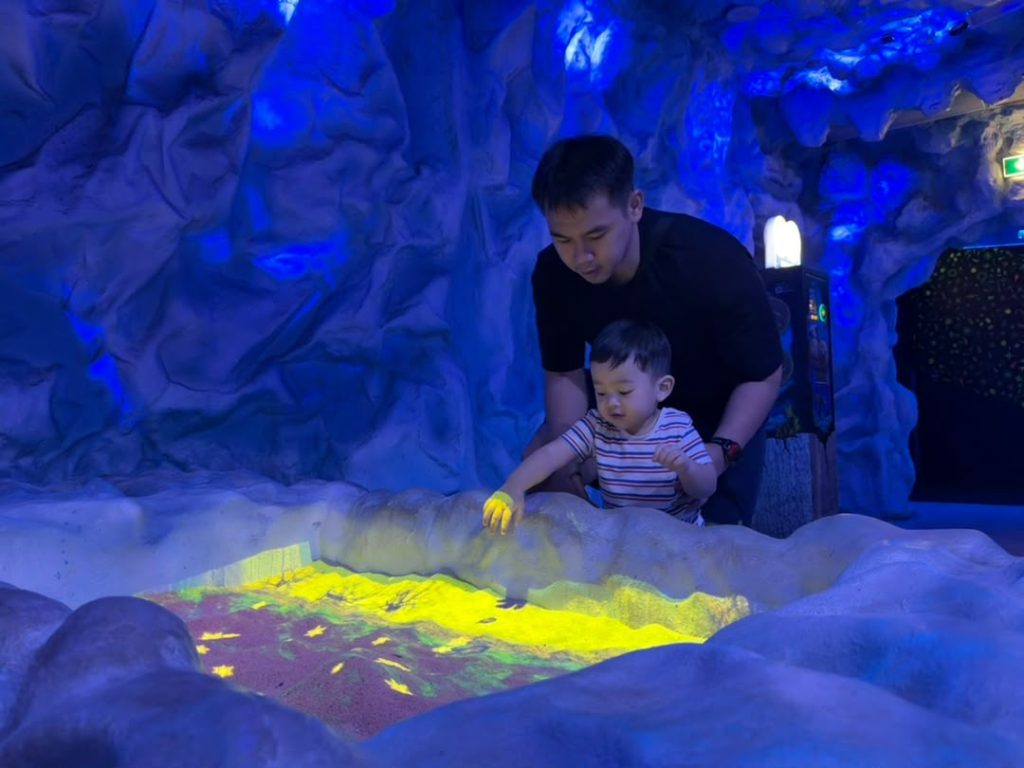 Rafael plays with sand with holographic projection at the Frozen Zone.
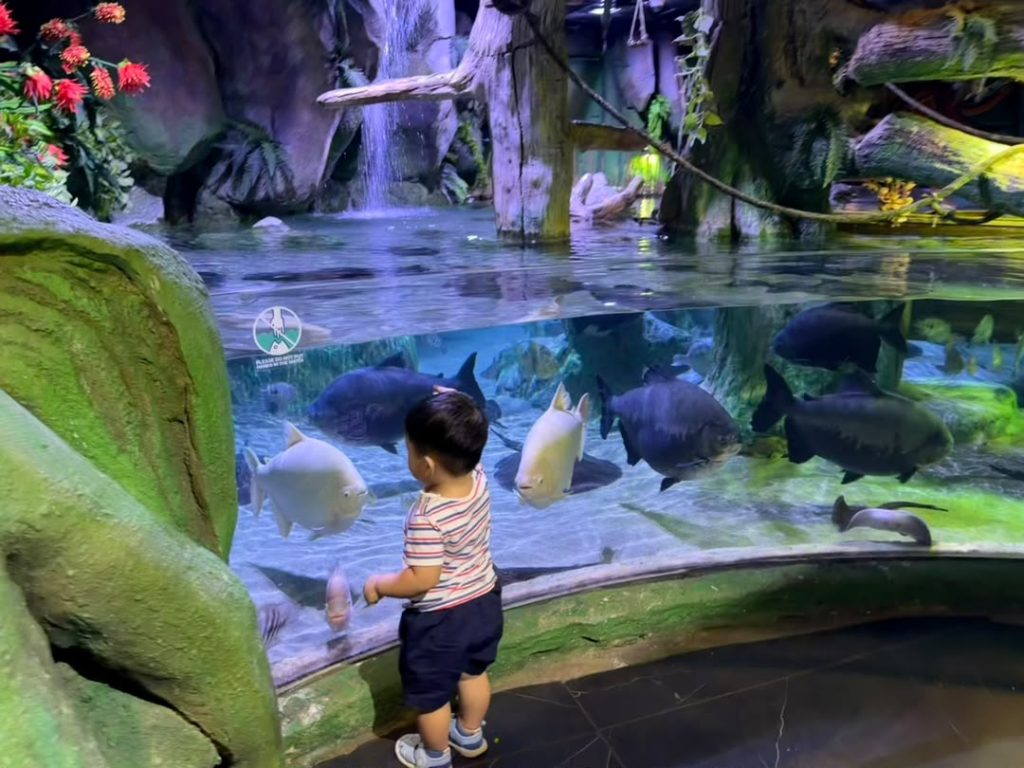 Fish, fish, fish… Rafael gets up close to the fishes.
Younger visitors can simply enjoy encountering the animals, while older children and adults are given enough information to begin understanding where those species live, how they interact with their environments and what pressures some face in the wild.
There is something particularly interesting about watching children inside an aquarium because their fascination often comes before any understanding of conservation.
A toddler may know nothing about biodiversity, habitat degradation or endangered species, but the instinct to stop, stare and point at an unfamiliar animal is already the beginning of curiosity about the natural world.
That curiosity is something The National Aquarium seeks to develop further through its education programmes, with a dedicated education department capable of accommodating tens of thousands of students.
Its programmes use the collection to introduce subjects ranging from the UAE’s coastal heritage to marine ecosystems and conservation.
Beyond the visitor experience
The more substantial side of the aquarium’s work, however, takes place beyond the spectacle of its public exhibits through its involvement in wildlife rescue and rehabilitation, particularly through its partnership with the Environment Agency – Abu Dhabi.
Under the Wildlife Rescue programme, animals found injured, sick or otherwise in need of assistance can be rescued and rehabilitated.
The ultimate objective, whenever possible, is to return them to their natural environment rather than keep them permanently under human care.
Sea turtles have become one of the most visible examples of this work, with more than 1,000 turtles rescued through the collaboration since the programme began.
Among them are green, hawksbill and loggerhead turtles that have undergone rehabilitation before being released back into Abu Dhabi’s waters.
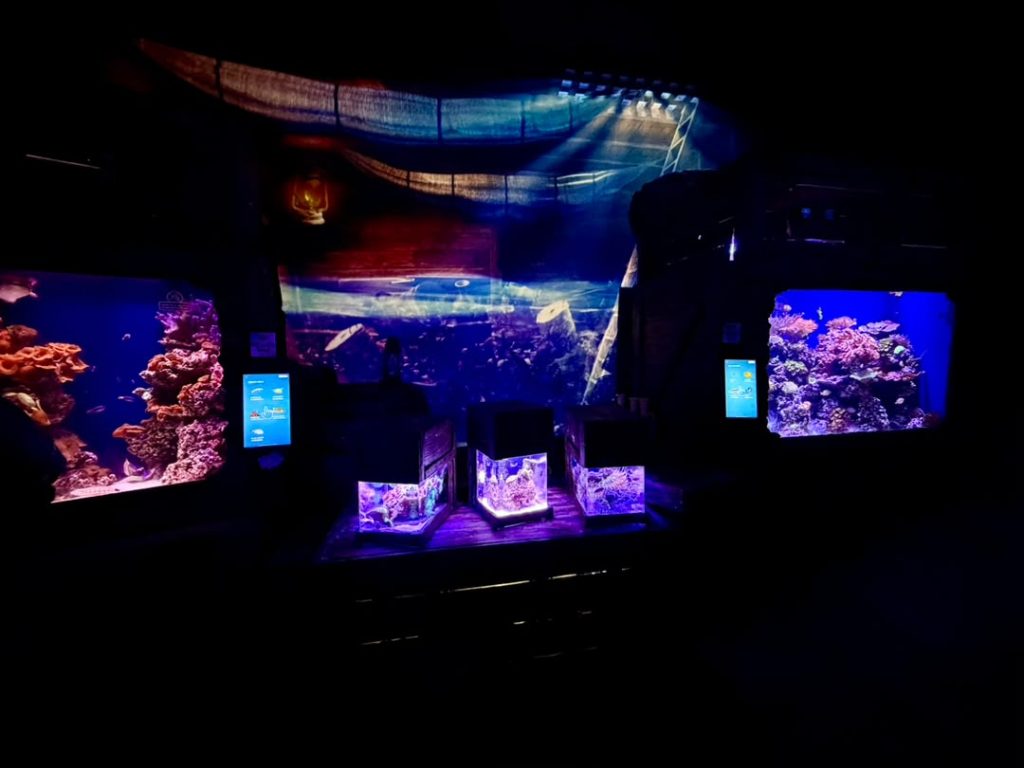 Inside the National Aquarium Abu Dhabi.
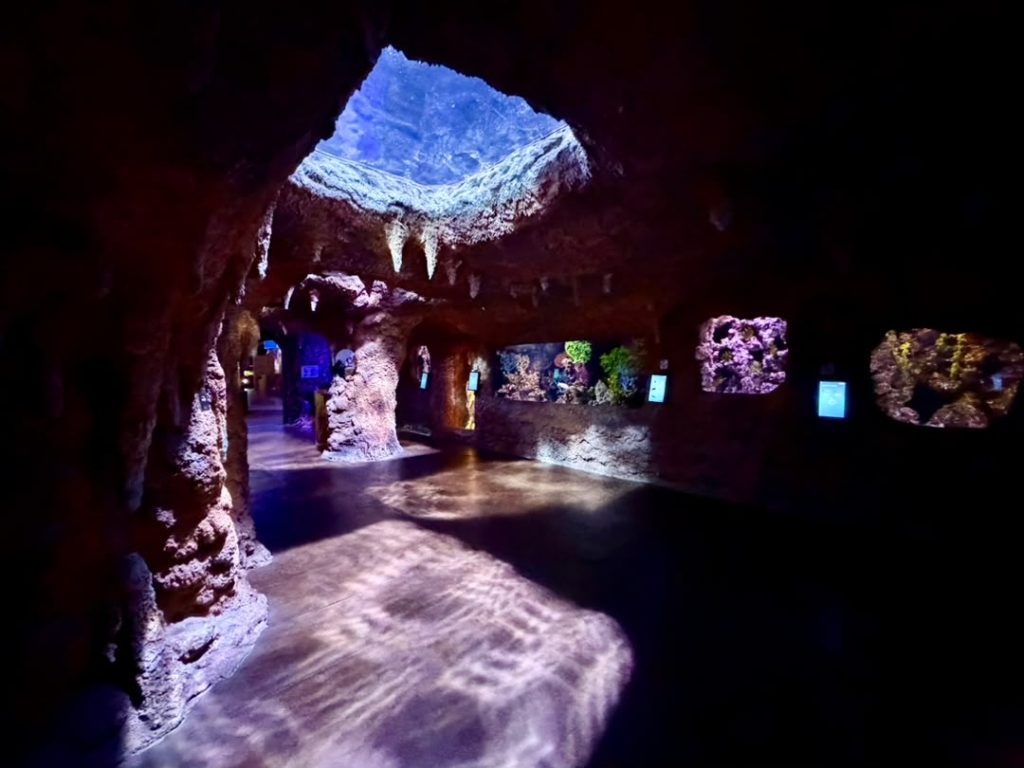 Inside the National Aquarium Abu Dhabi.
The programme provides an important counterpoint to the experience of walking through an aquarium.
It demonstrates that conservation cannot end with educating visitors about animals behind glass, but must also involve practical efforts to protect wildlife living beyond the attraction itself.
Marine animals face threats ranging from entanglement in fishing equipment and physical injuries to environmental changes.
Turtles in Abu Dhabi waters can also suffer from cold stunning when lower temperatures leave them weakened and unable to function normally, making timely rescue and rehabilitation particularly important.
Not every animal can eventually be returned to the wild, especially when injuries are too severe for it to survive independently.
Successful releases, however, provide a tangible example of how veterinary specialists, environmental agencies and institutions such as aquariums can work together, rather than allowing conservation to exist merely as a message printed beside an exhibit.
Abu Dhabi’s relationship with nature
The conservation work feels especially relevant in Abu Dhabi, where the extraordinary pace of development can sometimes make it easy for an international visitor to overlook how closely the emirate remains connected to its natural environment.
Beyond the city are the waters of the Arabian Gulf, islands, mangroves and vast desert ecosystems supporting an extraordinary variety of wildlife.
Marine turtles continue to inhabit Abu Dhabi’s waters, while its coastal habitats are also home to dugongs, dolphins and numerous other species.
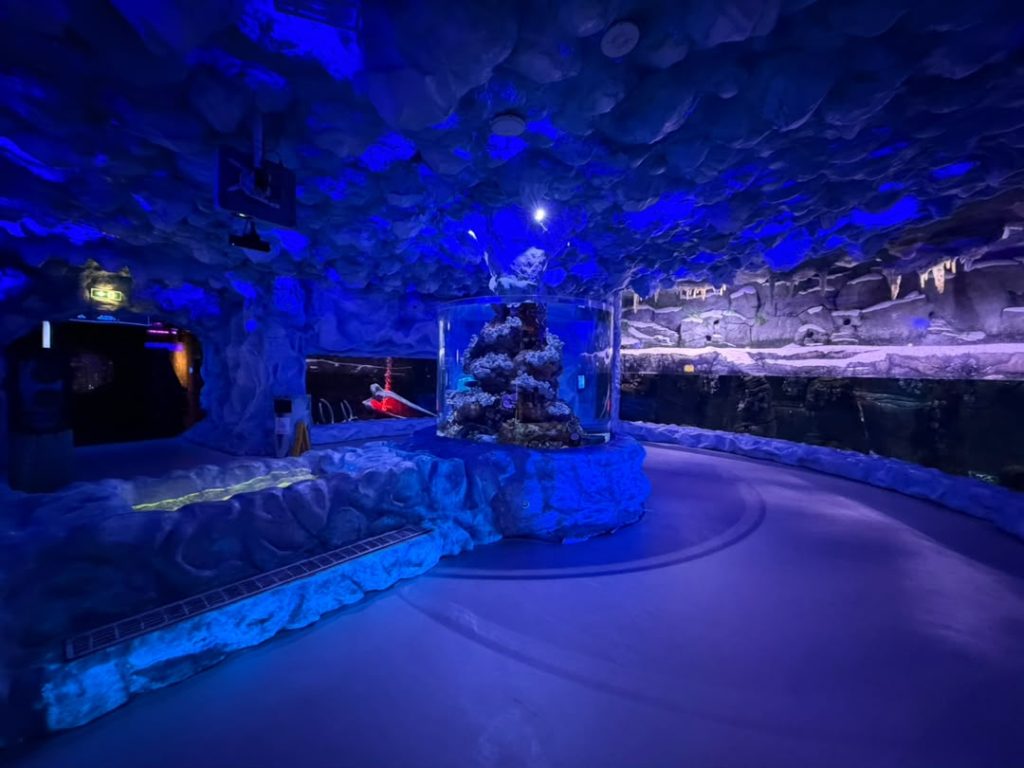 Inside the National Aquarium Abu Dhabi.
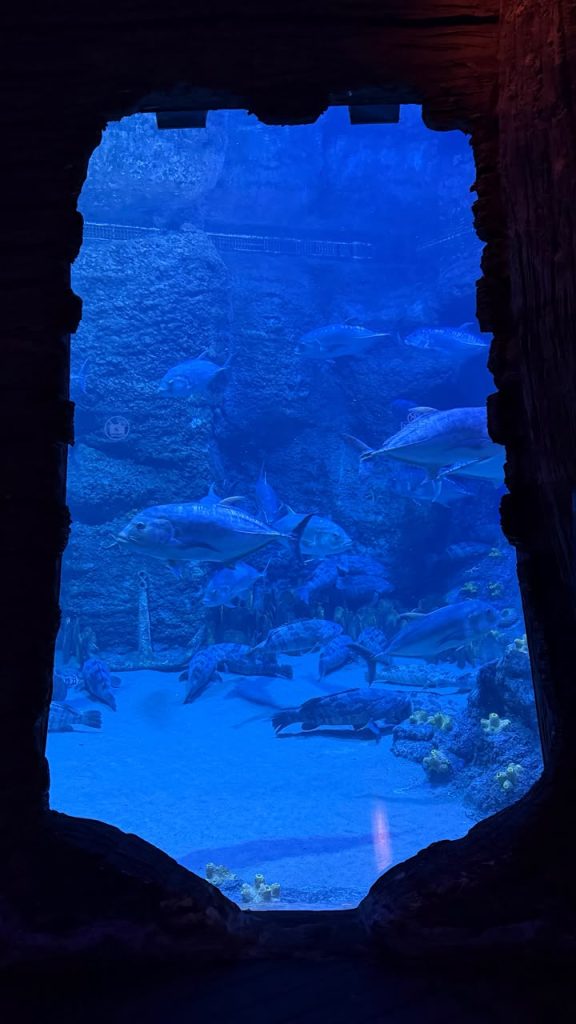 Inside the National Aquarium Abu Dhabi.
Environmental protection is therefore not simply an international concern presented for educational purposes inside an aquarium. It is a local responsibility involving wildlife found immediately beyond the city’s coastline.
That relationship between development and conservation is increasingly visible across Abu Dhabi, where new cultural, tourism and entertainment destinations continue to emerge alongside efforts to preserve the natural landscapes and heritage that existed long before the modern capital took shape.
The National Aquarium therefore sits comfortably within a much larger story about how Abu Dhabi presents itself to the world.
While the emirate is clearly interested in building attractions capable of drawing international visitors, there is also an effort to connect those destinations with education, heritage and a sense of place rather than allowing them to exist solely as entertainment.
Curiosity starts somewhere
By the end of the visit, what remains most striking is not necessarily one particular shark, ray or enormous viewing tank.
Instead, it is the way the attraction moves between spectacle and information without requiring visitors to choose between the two, allowing children to be entertained while giving adults a deeper understanding of the environments being recreated around them.
For Rafael, of course, those larger ideas remain years away.
There was no need to understand the history of pearling in the Arabian Gulf or the complexities of rehabilitating an injured sea turtle to be completely captivated by what was swimming on the other side of the glass.
Yet perhaps this is precisely where environmental awareness begins.
Before children can understand why an ecosystem needs protecting, they first need opportunities to discover that such a world exists.
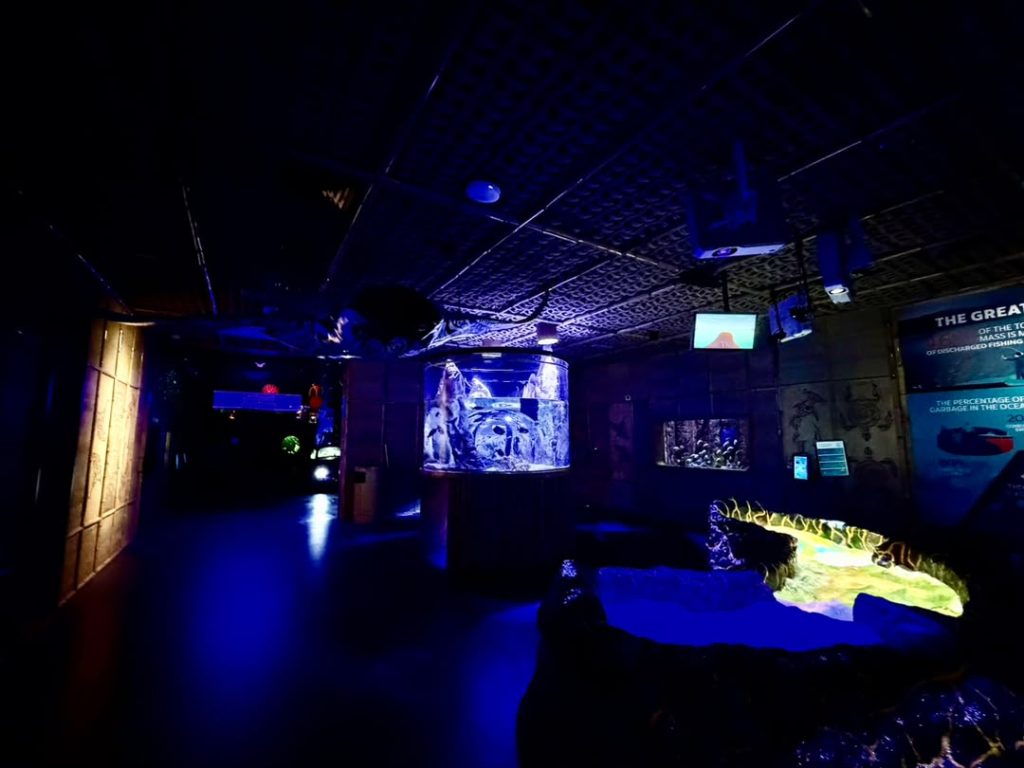 Inside the National Aquarium Abu Dhabi.
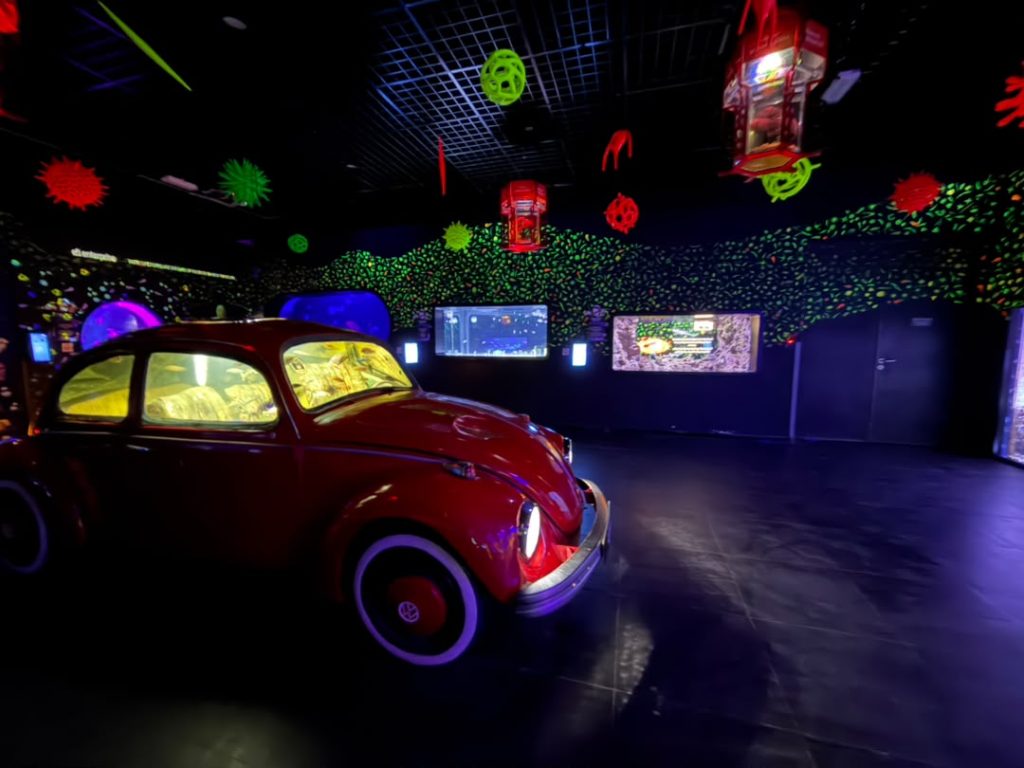 Inside the National Aquarium Abu Dhabi.
They need to see an animal they may previously have encountered only in a book or on a screen, and perhaps become curious enough to eventually want to know more about it.
The National Aquarium Abu Dhabi succeeds because it provides that sense of discovery while placing it within the context of a city whose relationship with the sea stretches much further back than its modern skyline might suggest.
In doing so, it connects the Abu Dhabi of today with the coastal communities of its past and, through its conservation work, with questions about what kind of natural environment will remain for future generations.
Outside, the towers, highways and ambitious developments of modern Abu Dhabi continue to reshape the capital.
Inside the aquarium, beneath the blue glow of its vast underwater habitats, visitors are reminded that another world has always existed alongside the desert – one that is quieter and largely hidden from view, yet no less important to the story of the emirate.
And for one small visitor experiencing it all for the first time, the conclusion required considerably fewer words: “Fish, fish, fish.”






 English (US) ·