


 2 weeks ago
68
2 weeks ago
68
ADVERTISE HERE
No, not at all.Evidence so far confirms that wildlife in Sarawak is directly affected by the dust, but habitat loss following forest fires, balanced to a greater and longer-lasting threat to species survival, thereby increasing the risk of conflict between humans and wildlife.
Sarawak Forestry Corporation (SFC) General Manager, Brother Arabi Brother Aimran said ongoing monitoring across Sarawak, from Tanjung Datu to Lawas, has not found any wildlife cases that can be specifically linked to the current dust episode.
According to him, SFC monitoring of wildlife is carried out on an ongoing basis, not only during the rainy season but also for other possible disasters including floods and El Nino phenomena.
 My Arab brother Aimran
"So far, we have not received any specific reports of wildlife across Sarawak being seriously affected by the fog.
"Therefore, we cannot confirm that the current conditions in Sarawak are affecting wildlife as a whole", he said in an exclusive interview with TVS at Niah National Park, Miri recently.
In fact, he said that the SFC has so far also not had any specific case of wildlife being rescued or found in affected condition due to current dust phenomena.
However, the absence of direct impact reports does not mean that Sarawak's wildlife and ecosystems are in a completely safe state.
On the other hand, attention is now shifting to a threat that is harder to see but can leave much longer-lasting effects: habitat loss.
When habitats burn, it's not just trees that are lost.
Brother Arabi said the summer and drought that are usually accompanied by rainstorms also increase the risk of forest fires, whether caused by intentional or unintentional human activity.
As per SFC monitoring, a fire incident was reported in the Samunsan Wildlife Conservation Centre area, Lundu on 20 August and is believed to have been caused by open burning by locals before spreading to the sanctuary.
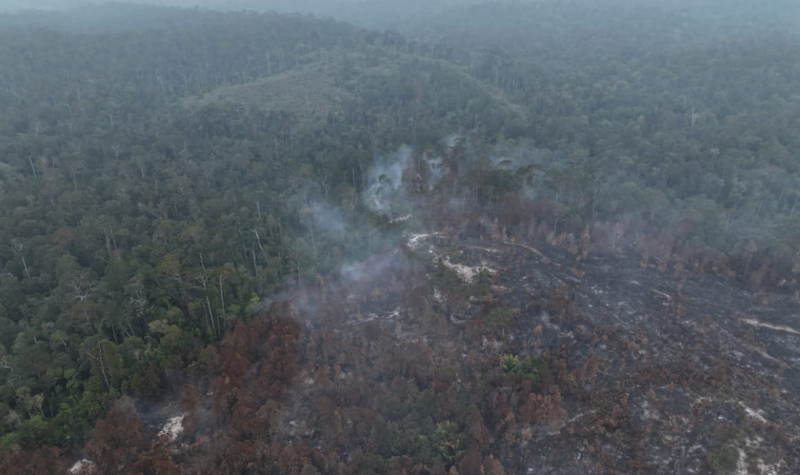 Forest fires in the Samunsam Reserve. Photo by JBPM
The fire is estimated to have affected about two hectares of land in Samunsam.
"What we're concerned about is habitat destruction from fires. When an area of habitat is affected, the areas that are wildlife habitats may be destroyed.
"As a result of habitat loss, wildlife is likely to move out of their original area and into local residential areas", he added.
According to Brother Arabi, wildlife especially wild mammals have the ability to escape from disaster-affected areas.
However, being able to escape does not mean that the animal is free from the effects of destruction.
When habitats are destroyed, homes that provide food, water and shelter are also lost.
This is where the effects of the fires began to cross forest boundaries.
Animals that lose their habitat may move further to find food, water or shelter, thus facing the possibility of entering human settlements.
The situation could trigger a human-wildlife conflict that had previously occurred in some areas of Sarawak including Kuching and Miri.
Wildlife doesn't necessarily come out of the dust.
SFC has previously received several reports of wildlife roaming in unusual areas including a forest cat reported crossing the road in Tanjung Kibong area, Sibu on 13 August 2026.
Another report was received on September 1 when a male proboscis monkey was spotted wandering near the Old Court House in Kuching.
However, after further monitoring, SFC did not link the two incidents as direct effects of dust.
That detail is important because it shows that the emergence of wildlife in human areas does not necessarily have to be explained by just one factor.
On the other hand, when an animal leaves its original habitat, the bigger question is what's happening to that habitat.
The dust is just another strain on the ecosystem.
Sarawak Conservation Chief WWF-Malaysia, Cynthia Chin said humans and wildlife are part of a system that is interdependent on forests.
He believes that dust should be viewed as an additional strain on ecosystems already facing various other pressures.
 Cynthia Chin
"Wildlife depends on the forest. When there is fog, fire and drought, the smoke will change how wildlife interact with the forest environment.
"These conditions affect their food sources, behaviour and breeding processes. Dust can also cause direct damage, especially when there is a fire that spreads rapidly so as to affect large mammals that cannot run fast or have no way to escape", he said in an exclusive interview with TVS at WWF-Malaysia Sarawak Office in Binamas Building, Kuching recently.
He said the effects were not necessarily visible in the form of dead or injured animals.
On the other hand, changes to plants, fruits, water sources and prey species can change the overall pattern of life in forests.
Species that depend on plants and fruits, for example, may face food shortages when plant cycles are affected while predatory species may lose prey resources.
"Wildlife will try to move to other areas in search of food and water. When they can't find it, their behavior will change. They may be moving to areas with better water supplies.
"If they cannot do so, eventually they may die", he added.
In the long run, these conditions can affect a species' ability to survive and subsequently affect its population.
Animals can escape, habitat does not necessarily recover
Cynthia says some animals may be trying to avoid smoke-filled areas or fires while others may be hiding, seeking shelter or waiting for conditions to recover.
However, the ability to move does not mean that all animals have the same choices.
The condition depends on the type of species, available habitat and extent of disturbance.
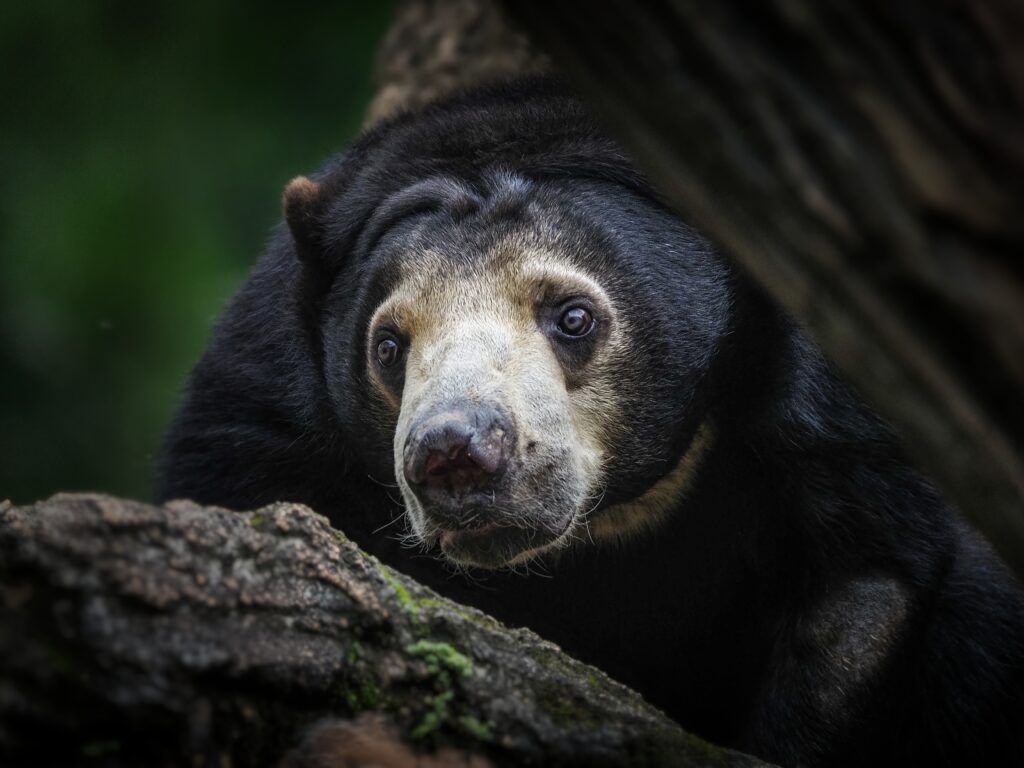 The Sun Bear. Photo by Envato
For warm-blooded mammals, he said, atmospheric pollution could potentially put pressure on the respiratory system in addition to affecting behaviors including food-seeking and breeding movements.
"Based on the effects of asthma on humans, we can assume that animals may also experience similar effects including respiratory irritation and difficulty breathing.
"These conditions also put pressure on their behaviour. They may not want to breed or reproduce while their way of finding food can also change", she said.
The question then is not just whether an animal can survive a few days in the dust.
The bigger question is whether the habitat that formed the basis for its survival survives after the fires and dust disappeared.
Fog zone: danger of burning from below
For WWF-Malaysia, one of the biggest risks in fire episodes during the dry season is when fire enters a foggy area.
Cynthia says peatlands are of great value not only to biodiversity but also to human life because of their ability to store water.
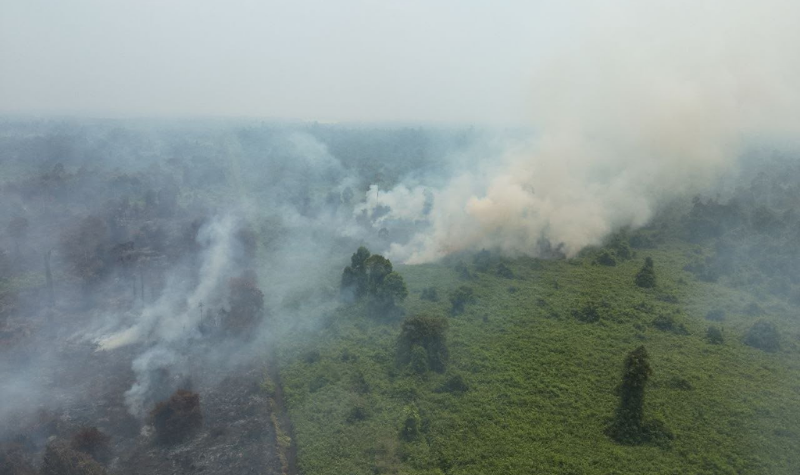 The forest fires in Serembang, concrete. Photo by JBPM
"Compared to Borneo, habitat loss in Sarawak is much lower. However, the threat arises when fires spread to habitat areas such as peat bogs or peatlands.
"The damage can be very extensive and long-lasting because the area can burn for a long period of time", he said.
According to him, fires in peatlands can occur far below the surface and continue even if not visible from above.
The threat makes a foggy area different from an ordinary forest fire because its effects can continue long after the fire is no longer visible.
When the mist is damaged, humans are affected.
Cynthia says that the importance of peat does not stop at wildlife conservation.
The area is usually filled with water and plays a role in storing and maintaining water, as well as helping to be a natural stronghold against flooding.
When peatlands are dried, cleaned or burned, the effects can spread to soil structures and water systems.
"When a fire occurs or a foggy area is cleared, the area becomes more susceptible to flames. The next fire could destroy the peatlands.
"This condition also affects human life as it can cause soil surface degradation or landslides. In addition, the burning of organic matter in peatlands also poses problems", he said.
 Scenes of the flood zone in Bintulu captured by Sarawak Civil Defence Force Drone Unit on 30 January. File name photo
According to Cynthia, the loss of peat functionality could eventually affect communities when the area's natural ability to store water and help control flooding is disrupted.
"Of course, this also affects wildlife. However, the effect also threatens human survival due to the loss of peatlands that serve as natural strongholds to reduce flood risk.
"If peatlands are destroyed, the risk of flooding will increase", he said.
He said Sarawak has lost some of the peatlands in the last four to five decades, making efforts to maintain and manage the area increasingly important.
When wildlife appears in the backyard
habitat loss could ultimately change what happens outside the forest.
Cynthia said that when wildlife appears in residential areas, backyards or places other than their usual habitat, the community should be aware that there may be disruptions to the animal's ecosystem.
"For example, we saw an incident in Ketapang, West Kalimantan where an orangutan affected by dust fled to a nearby area.
"When there is a fire or fog, this reduces the amount of sunlight that penetrates the environment. Some species of animals and insects may be confused by these changes", he said.
According to Cynthia, the appearance of such an animal should not continue to be considered a disorder that needs to be eliminated.
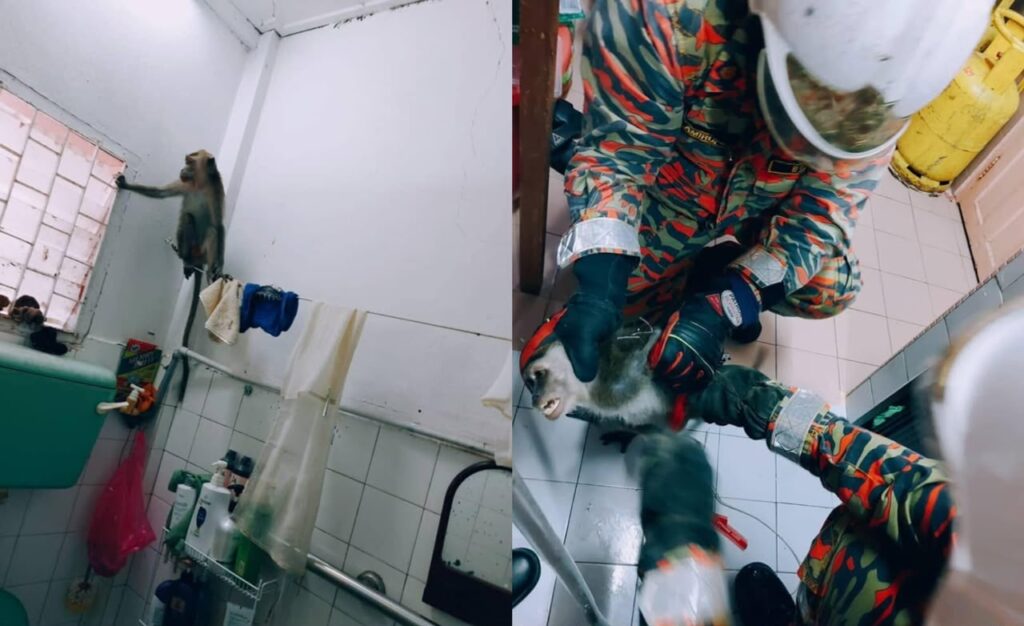 The Bintangor Bomb and Rescue Department managed to catch a monkey breaking into the bathroom of a house in Bintangor. Photo by BBP Star
He said civilians who find wildlife in areas where they shouldn't have to avoid approaching or disturbing the animals.
"We need to understand that animals don't actually choose to be around humans. On the contrary, they are more likely to distance themselves from humans.
"Society should not have a hatred of wildlife because we need to understand that they don't want to be around humans either. The bigger issue is actually the disruption of natural systems and habitat destruction", he said.
In this regard, he suggested continuing to contact authorities such as the SFC that are able to handle such situations.
Don't wait for disaster to become a habit.
For WWF-Malaysia, habitat management cannot only be improved when dust hits.
Cynthia said efficient management of peatlands is critical to reducing the risk of fire and ensuring that dust episodes do not persist due to burns in the area.
"Sarawak has the largest forest area in Malaysia. Sarawak is also the only province in Malaysia to boast that over 50 percent of its land area is still covered by forests.
"This is a very good thing. Now, we need to ensure that the forest area is maintained and well managed", he said.
According to him, no immediate action can eliminate dust all at once, instead the necessary approach is continuous management, conservation and prevention.
The effort, he said, must include forests, wildlife, plants and local communities so that the benefits of natural systems can continue to be shared with humans without harming ecosystems.
"We must continue to manage and conserve the natural environment including forests, wildlife and plants, while ensuring that local communities also benefit from the natural systems.
"The most important thing is that we need to calm down and continue the ongoing conservation efforts", he said.
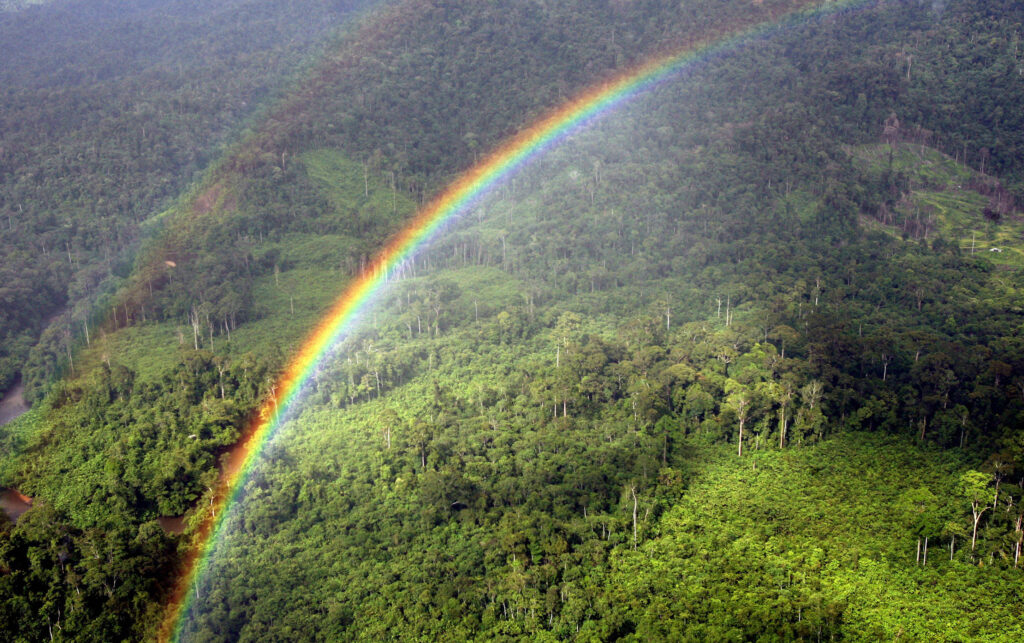 The rainforest in Ulu Baram, Miri. Photo provided by AFP
Cynthia said Sarawak also needs to continue the sustainability agenda to ensure that environmental threats do not develop into bigger disasters in the future.
Although most of the dust Sarawak feels comes from neighbouring countries, he said, the province cannot consider similar risks unlikely to occur from within its own borders.
"We know that most of the dust at this time comes from neighboring countries. However, if we're not careful, within the next 10 to 20 years, dust may also come from our own areas.
"We don't know if it will happen and we don't want that to happen", he said.
He said the long-term health effects of dust and air pollution still require further research including the possibility of lung disease and allergies.
He said, however, that precautions should not wait until the effects become clearer.
"The efforts of the Government of Sarawak to green up Sarawak, maintain sustainability and preserve intact forests are the right move. Our future depends on that effort.
"However, we also need to realize that time is running out. We're in a race against time, and we need to make sure that we stay one step ahead of environmental threats. The threat is happening now", he said.
When the forest is no longer breathing
As of now, the SFC has no evidence to confirm that the current foul episode has directly affected Sarawak wildlife.
However, those numbers are no reason to assume the threat is over.
A single fire in Samunsam alone has affected about two hectares of habitat while a threat to peatlands potentially occurs far below the surface, destroying ecosystems and transforming water systems that are also natural strongholds for humans.
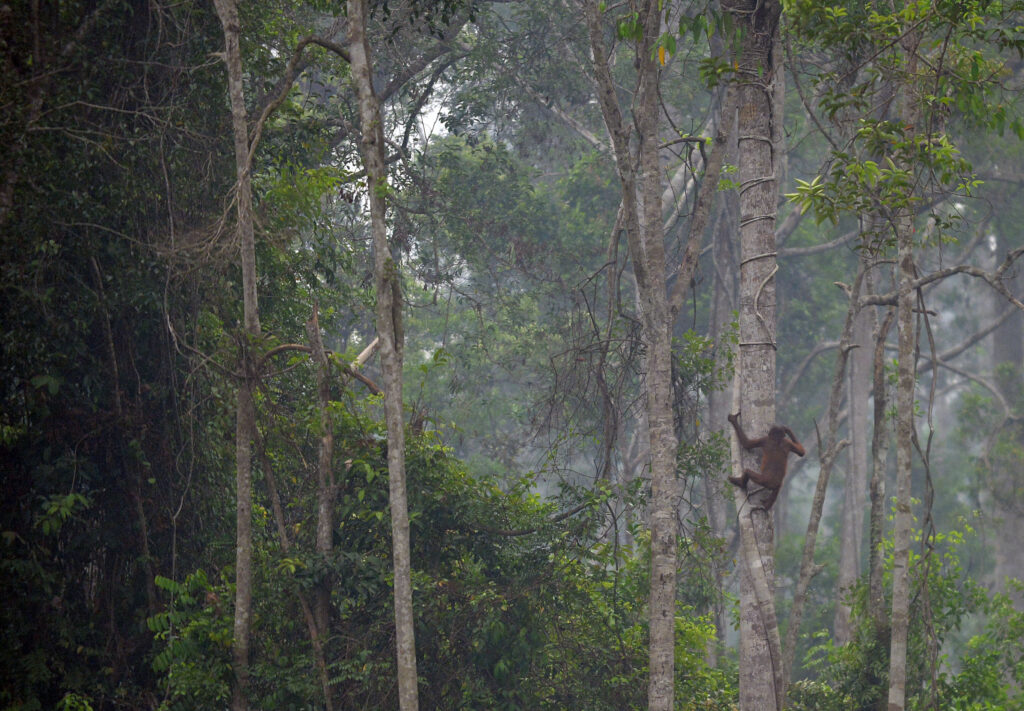 The Utan people climbed trees in a state of dust. Photo by AFP
When habitat is destroyed, wildlife may have to move.
When food and water are scarce, behavior can change.
When animals leave their original habitat, they may enter human territory.
And when that happens, human-wildlife conflict may just be a symptom of a bigger problem starting in the woods.
For humans, dust gives the choice of shelter, wearing a face mask or leaving contaminated areas.
For wildlife, forests are habitats, sources of food, water and shelter that cannot be left alone.
So the question is no longer just how do wildlife breathe in the fog.
The bigger question is, when the smoke's gone, the fire's out and the sky's back bright, are their houses still there?








 English (US) ·